

A retailer can have 500 units of a product in its system and still lose the sale. The stock may be sitting in the wrong store, waiting in a backroom, incorrectly recorded, or unavailable on the shelf when a customer looks for it. For retailers, knowing that stock exists is only one part of the problem. The bigger question is whether the right product is available at the right place and can actually be sold. That gap between recorded stock and sellable stock is where many retail operations lose efficiency. It affects replenishment, store teams, online orders and the customer experience, all before anyone notices that the numbers do not match.
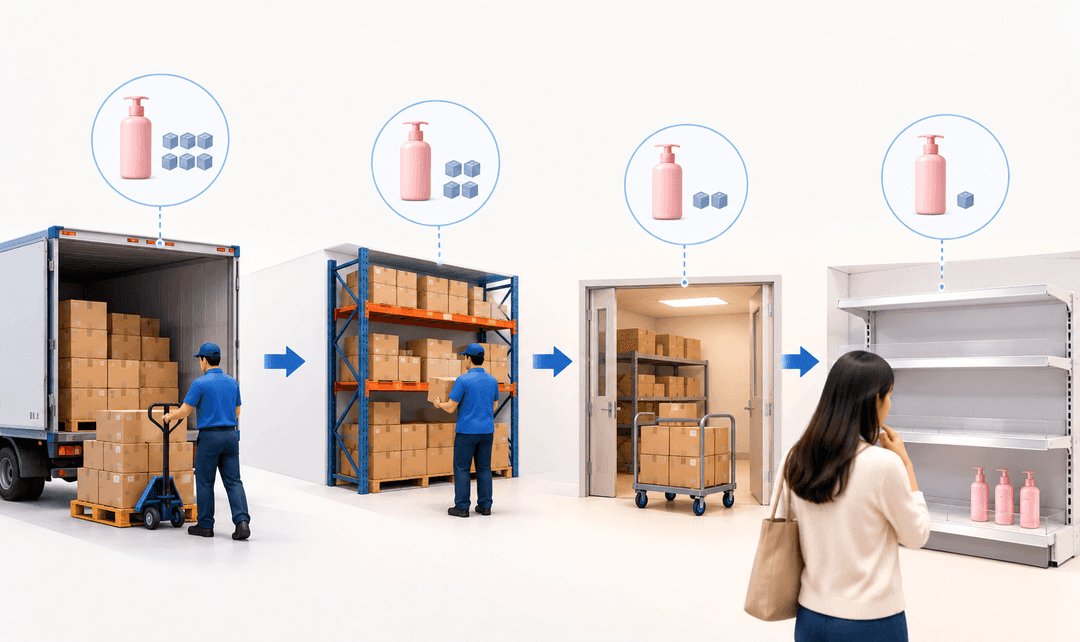
Retail stock moves constantly. A product can arrive at a distribution centre, move to a store, enter the backroom, reach the shelf and eventually be purchased. Each movement creates an opportunity for information to become outdated.
A retailer may therefore see 20 units in its records while only five are actually available on the sales floor. The remaining units could be in receiving, misplaced, damaged or reserved for another order. This is where inventory management needs to move beyond counting units. Retailers need visibility into where stock is, what stage it is at and whether it can fulfil actual demand.

The consequences are usually operational before they become visible to customers.
Store teams may spend time searching for products that the system says are available. Replenishment teams may send stock to a store that already has enough inventory. Online shoppers may place orders for products that cannot be picked. Meanwhile, another location may be carrying excess stock of the same SKU. These mismatches create avoidable work across stores, warehouses and fulfilment teams. They can also make sales data harder to interpret because an unavailable product may appear to be experiencing weak demand when the real issue is poor availability.
The weakest points are often the handovers.
A distribution centre may dispatch the correct quantity, but the store receives something different. A store may receive the stock correctly but fail to move it from the backroom to the shelf. An online order may reserve a unit just as a customer purchases the same product in-store. These situations show why retail inventory management cannot be treated as a warehouse-only function. Shelf execution, store processes, fulfilment and product data all influence whether recorded stock becomes a sale.
Retailers should first map the physical journey of priority products, from supplier receipt to distribution, store receiving, shelf replenishment and final sale. At each point, they can identify where information is captured, updated or lost.
Standardised product identification can help create continuity across these stages. Retailers can then connect stock records with sales, replenishment and fulfilment processes instead of treating each as a separate activity. The aim is not simply to know how much stock exists. It is to know whether that stock is where it needs to be, correctly identified and ready to fulfil demand.

For retailers, the most useful visibility is actionable visibility. A system that shows stock without explaining its location or availability leaves store teams to solve the gap manually.
When product identification, stock movement and store-level processes work together, retailers can make replenishment decisions with greater confidence, reduce unnecessary stock searches and improve the connection between what the system records and what customers can actually buy. That connection is ultimately what turns stock into sales. Better visibility is valuable, but its real impact comes when retailers can act on the information before an availability problem reaches the customer.
Stock may be in the backroom, receiving area, reserved for an online order, misplaced or awaiting processing. System quantity alone does not always indicate whether a product is shelf-ready.
GS1 standards enable accurate product identification and data sharing across the supply chain, helping retailers improve visibility of where products are and how they move through the store.
Consistent product identification helps stores, warehouses and checkout systems recognise the same product accurately, reducing confusion between similar SKUs, pack sizes and variants.
GS1 standards such as GTINs provide a globally unique way to identify products consistently across systems, locations and trading partners.
It can lead to missed sales, unnecessary replenishment, wasted staff time, incorrect online availability and excess stock in locations where demand is lower.
Using GS1 standards for product identification and data sharing can help improve the accuracy and consistency of inventory information across the supply chain.
Customers increasingly expect products shown as available online to be fulfilled quickly. Connecting channels gives retailers better visibility when allocating stock for delivery, pickup or in-store purchases.
GS1 standards help connect product identification and product data across physical and digital channels, supporting more consistent inventory visibility and fulfilment.
Start with high-volume or frequently unavailable products and map their movement from receiving to sale. This helps identify where stock information becomes inaccurate or delayed.
Adopting GS1 standards for product identification and data capture at key points in the product journey can help retailers track stock more consistently from receiving to sale.
Your email address will not be published. Required fields are marked *