

A customer walks into a supermarket looking for a product they bought last week. The shelf is empty. Another brand is available, but the customer wanted the familiar one. They check another store, open a quick-commerce app, or simply postpone the purchase. For the retailer, the missing product may look like a small stock issue. For the customer, it can be the reason to shop somewhere else. An empty shelf is rarely just about having "no stock". It can point to a gap between what the retailer believes is available, what the warehouse has recorded, and what is actually sitting on the shelf. For retailers operating across stores, marketplaces, and quick-commerce channels, these gaps can become expensive very quickly.
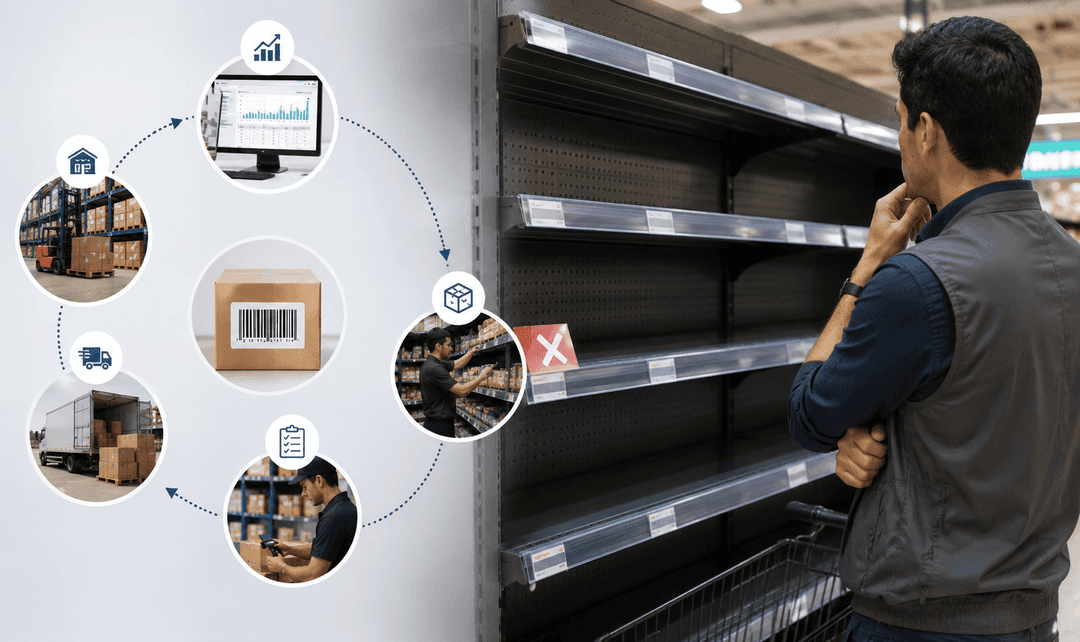
The shelf only shows the final outcome. The cause could be somewhere much earlier in the retail process. A fast-moving SKU may have sold faster than forecast. A replenishment order may still be waiting at the distribution centre. Stock may have arrived at the store but not been put away. Or the system may show inventory that cannot actually be located. This is where inventory management becomes an operational issue rather than simply a stock-counting exercise. Retail teams need to understand not only how much stock exists, but where it is, whether it is sellable, and how quickly it can reach the shelf.
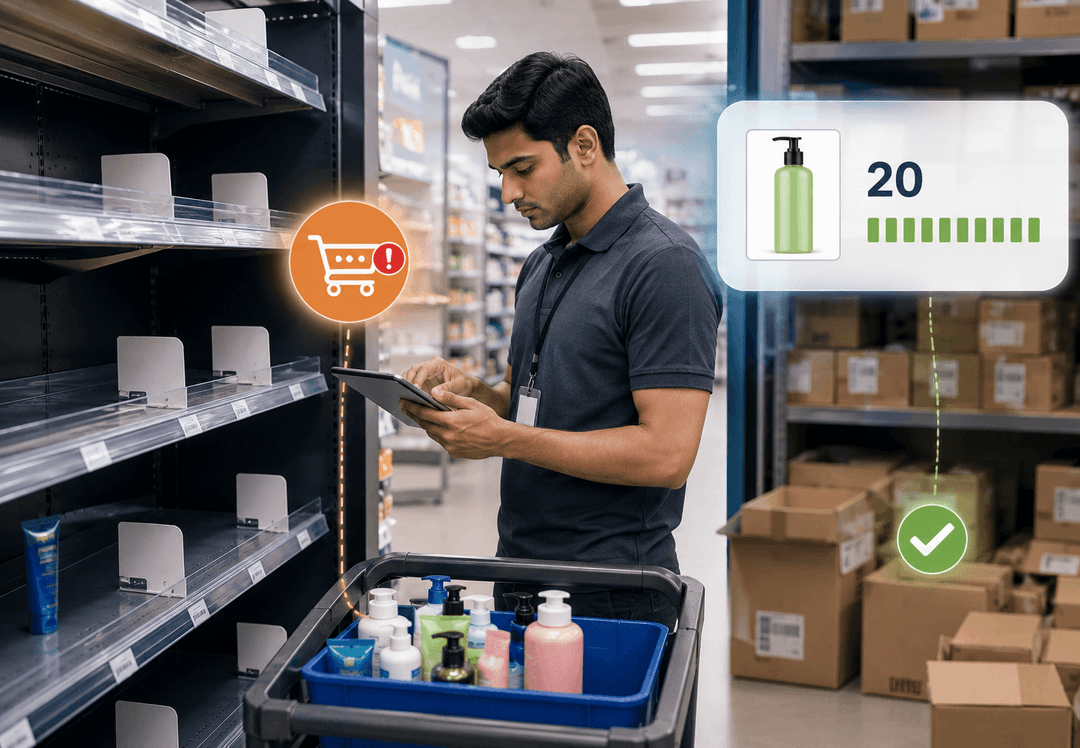
One of the most frustrating situations for store teams is seeing inventory available in the system while customers see an empty shelf. Consider a popular personal-care SKU. The central system shows 20 units at a store. The shelf is empty. After checking the backroom, employees discover that some units are waiting to be processed while others were moved to a different location.
The stock technically exists. The customer still cannot buy it. These gaps create unnecessary work for store associates and make replenishment decisions harder. An inventory management system can provide visibility, but its value depends on the accuracy and timeliness of the information being captured.
Empty shelves are only one visible symptom.
Inaccurate stock information can also lead to:
These issues become particularly costly for FMCG and grocery retailers, where margins are tight, and product turnover is high. A product that remains unavailable for even a short period during a peak demand window can represent lost sales that cannot always be recovered later.

The answer is not always "hold more stock". Carrying additional inventory can increase working capital and storage pressure without solving the underlying visibility problem.
Retailers should instead investigate recurring patterns. Which SKUs frequently go out of stock? Are certain stores receiving replenishment late? Are inventory records updated at every relevant handover? Are online and physical channels drawing from the same accurate information? The goal is to identify where the gap begins rather than repeatedly fixing the symptom at store level.
Stock may be in a backroom, awaiting processing, incorrectly recorded, reserved for another order, or physically misplaced.
They can lead to lost sales, customer dissatisfaction, emergency stock transfers, and additional work for store teams.
Retailers need to know whether inventory is genuinely available across stores, websites, marketplaces, and quick-commerce channels.
Not necessarily. Excess stock increases carrying costs, while the underlying issue may be inaccurate records or inefficient replenishment.
They should examine sales patterns, replenishment timing, warehouse movements, store-level records, and differences between physical and digital stock.
Your email address will not be published. Required fields are marked *