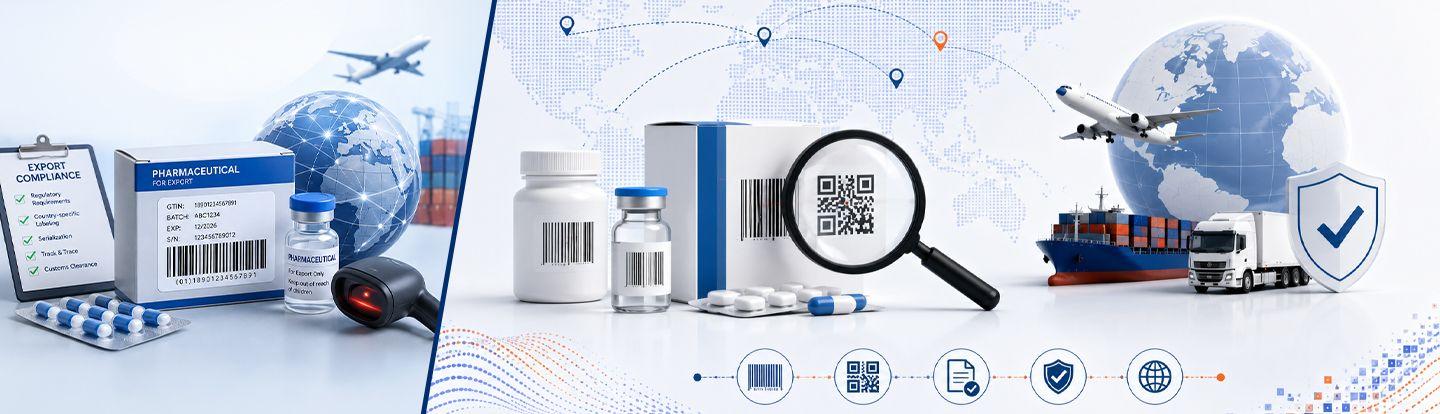

Pharmaceutical shipments face delays during export onboarding because the barcode data does not validate properly. This is becoming a common challenge in pharmaceutical exports, especially when products move across multiple distributors, regulators, and retail systems internationally. Many businesses focus heavily on packaging compliance and documentation but overlook one important operational layer - product identification. If the barcode structure does not align with recognised standards, export approvals and distributor onboarding can slow down quickly. That is why pharmaceutical companies are becoming more careful about the type of barcode they use during product setup and packaging workflows. Because in regulated industries, barcode accuracy affects much more than scanning.

Pharmaceutical exports involve multiple verification checkpoints.
For all of these systems to work consistently, every item barcode needs to remain accurate and traceable across the supply chain.
Problems usually appear when:
In many cases, the issue is not visible internally at first. It becomes noticeable only when export partners begin validating product information.
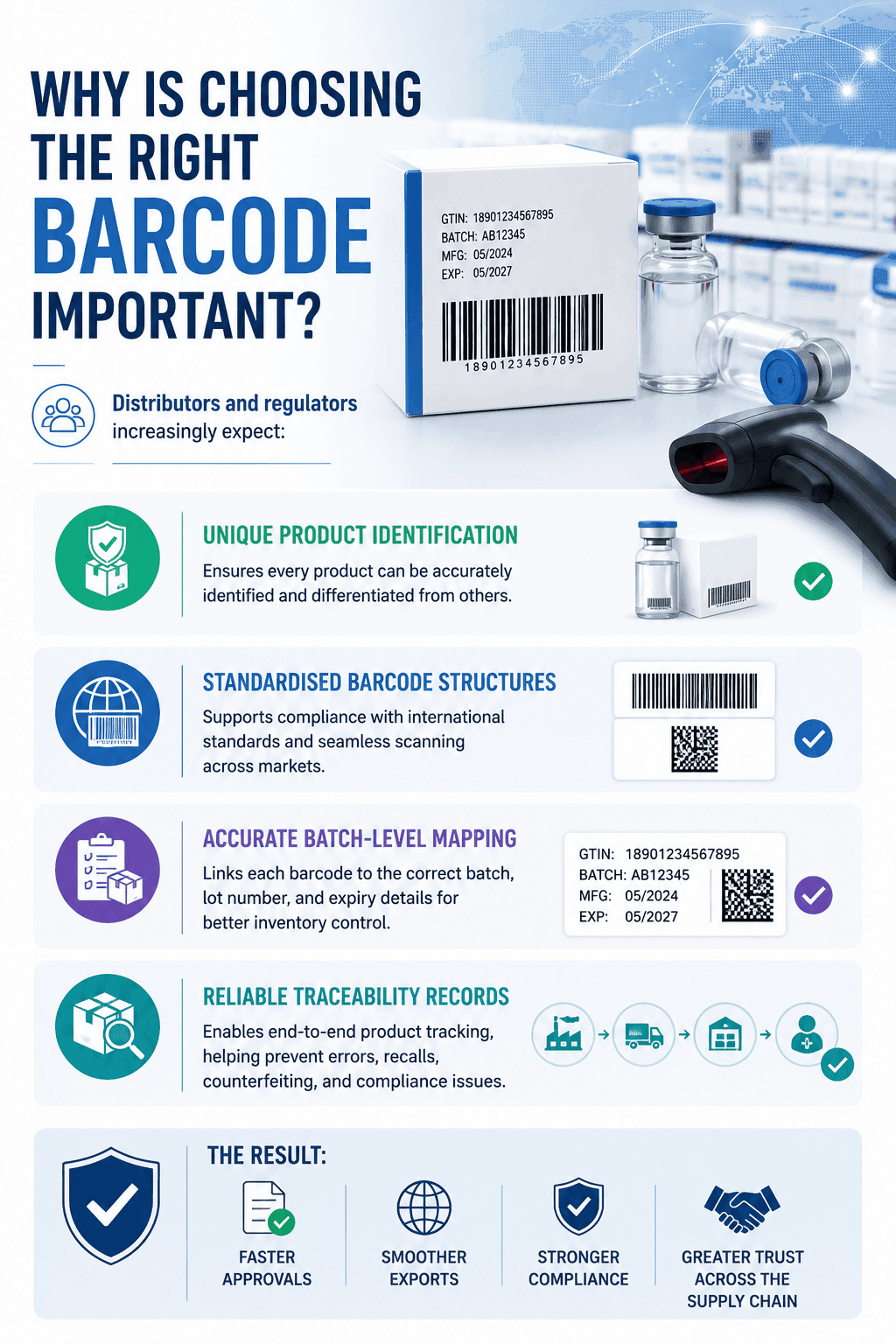
A lot of businesses assume a barcode image alone is enough for exports. That is not always true.
A barcode may create a scannable image, but export systems also validate the product identifier behind the barcode. If the identifier is not properly structured or recognised internationally, the product may still face onboarding delays. This becomes especially important in pharma because traceability requirements are stricter compared to many other industries.
Distributors and regulators increasingly expect:
Without that consistency, operational verification becomes difficult later.
Export operations depend heavily on data consistency. If one system interprets a product differently from another, verification slows down quickly.
That affects:
This is why maintaining a reliable item barcode structure is becoming operationally important for pharmaceutical exporters. The barcode itself may scan correctly, but if the associated product data does not align across systems, manual verification often becomes necessary. That increases delays and operational workload.
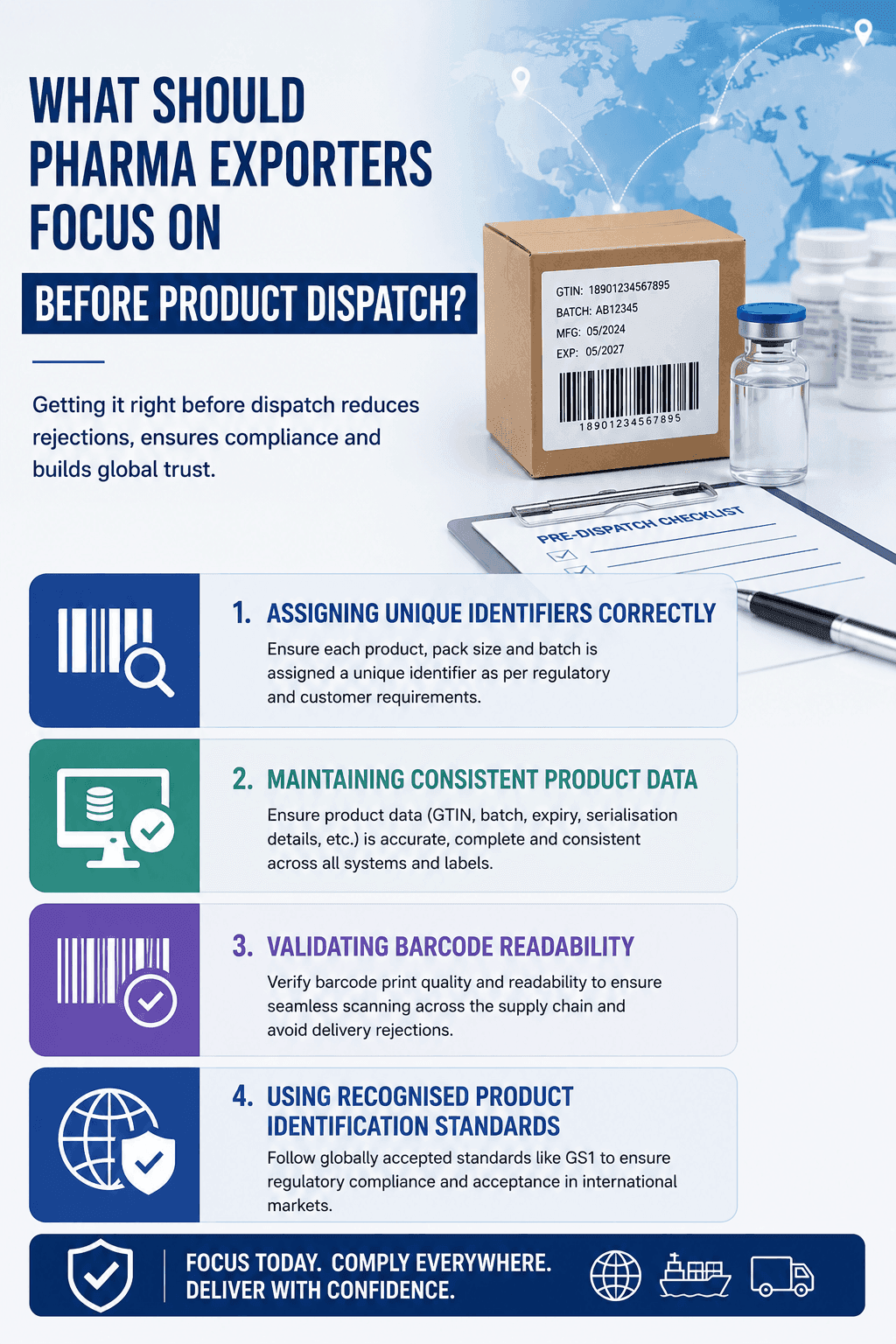

The biggest improvement usually comes from validating barcode structures early in the export process.
That includes:
A properly structured item barcode system reduces the chances of export delays, distributor pushbacks, and product verification gaps later. For pharmaceutical businesses scaling internationally, operational consistency becomes increasingly important.
Barcodes help ensure accurate product identification, traceability, and smoother export verification across global supply chains.
Yes. Incorrect barcode structures can create onboarding delays, distributor verification issues, and export approval challenges.
They should use globally recognised barcode structures that support traceability, compliance, and accurate product mapping.
Your email address will not be published. Required fields are marked *