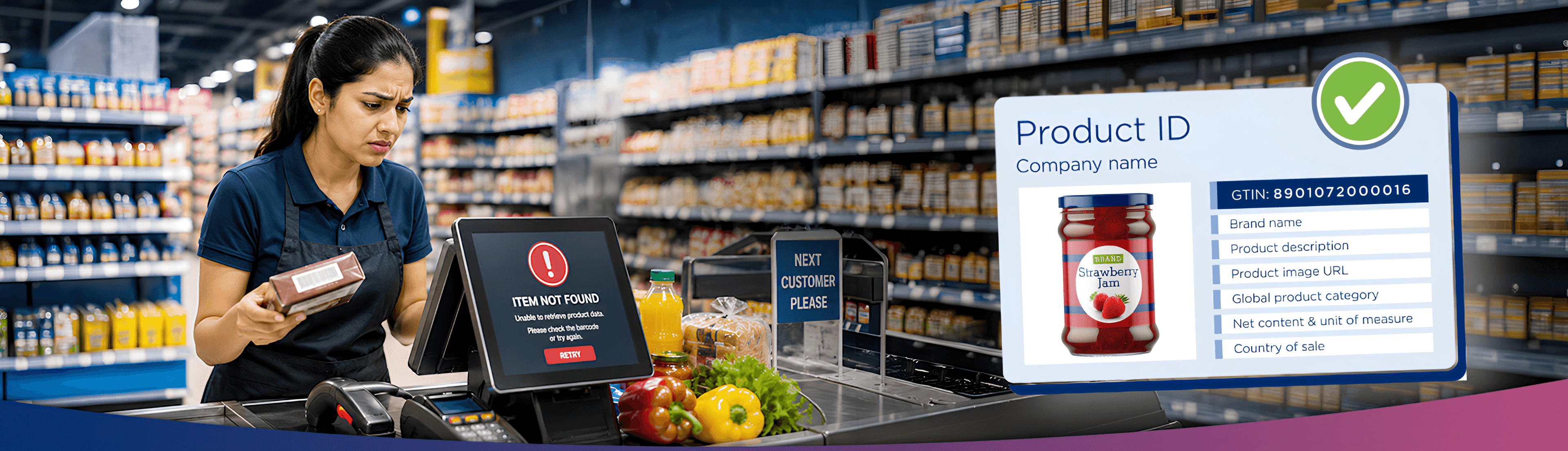

A customer reaches the billing counter with a basket full of products. Everything is moving smoothly until one item is scanned. The barcode works. The problem is the information behind it. The price shown on the screen does not match the shelf label. The cashier pauses the transaction. A supervisor is called. Other customers in the queue start waiting. For the shopper, it is an inconvenience. For the retailer, it is a warning sign. Most checkout issues are treated as store-level problems, but many actually begin much earlier. By the time an error appears at the POS, inaccurate product information may already have travelled through inventory systems, pricing files, and store databases.
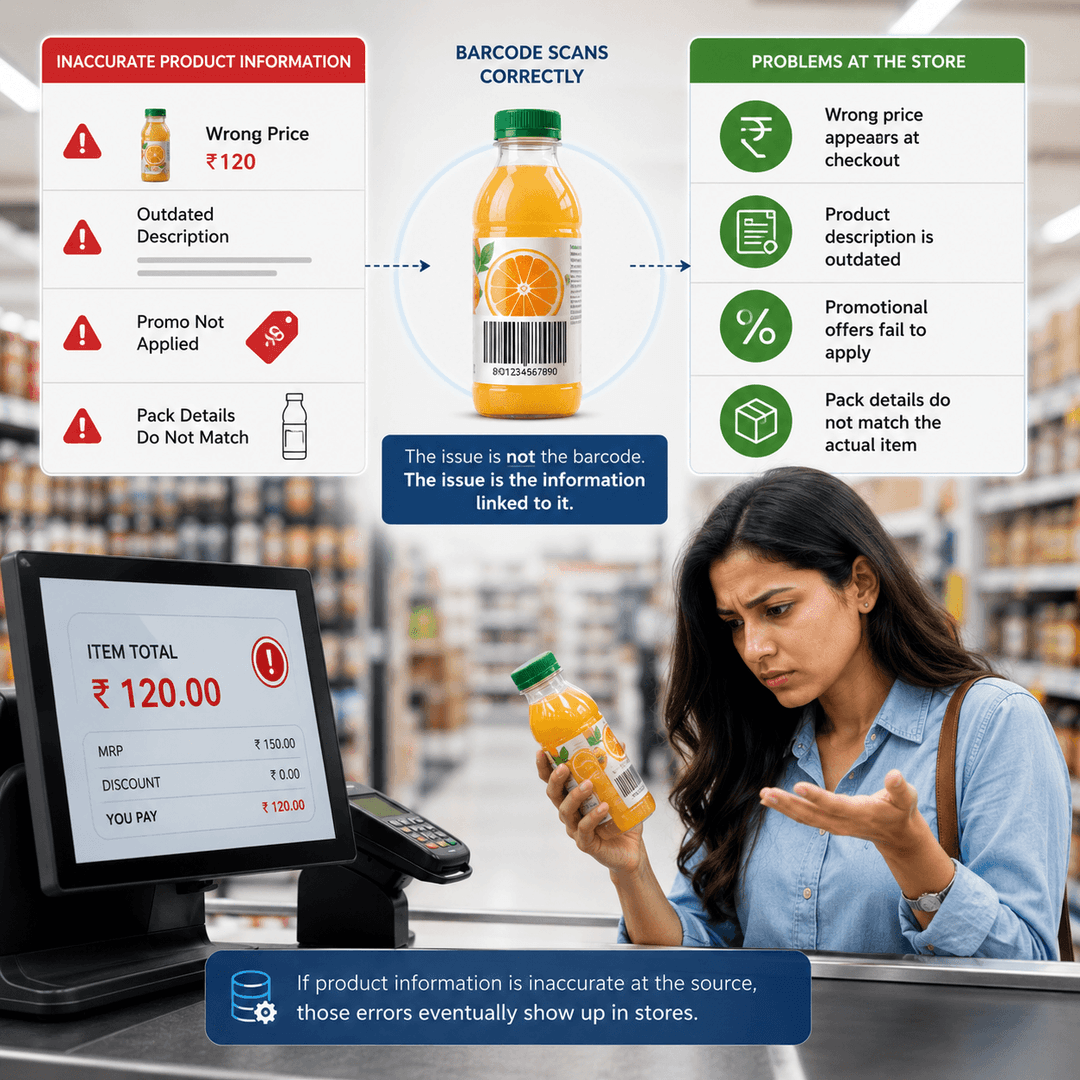
Retailers regularly update product prices, pack sizes, descriptions, promotions, and product attributes. When this information is not updated consistently across systems, problems begin to appear.
A product may scan correctly, but:
The issue is not the barcode. The issue is the information linked to it. This is why many retailers are investing more effort into Product data management. If product information is inaccurate at the source, those errors eventually show up in stores.
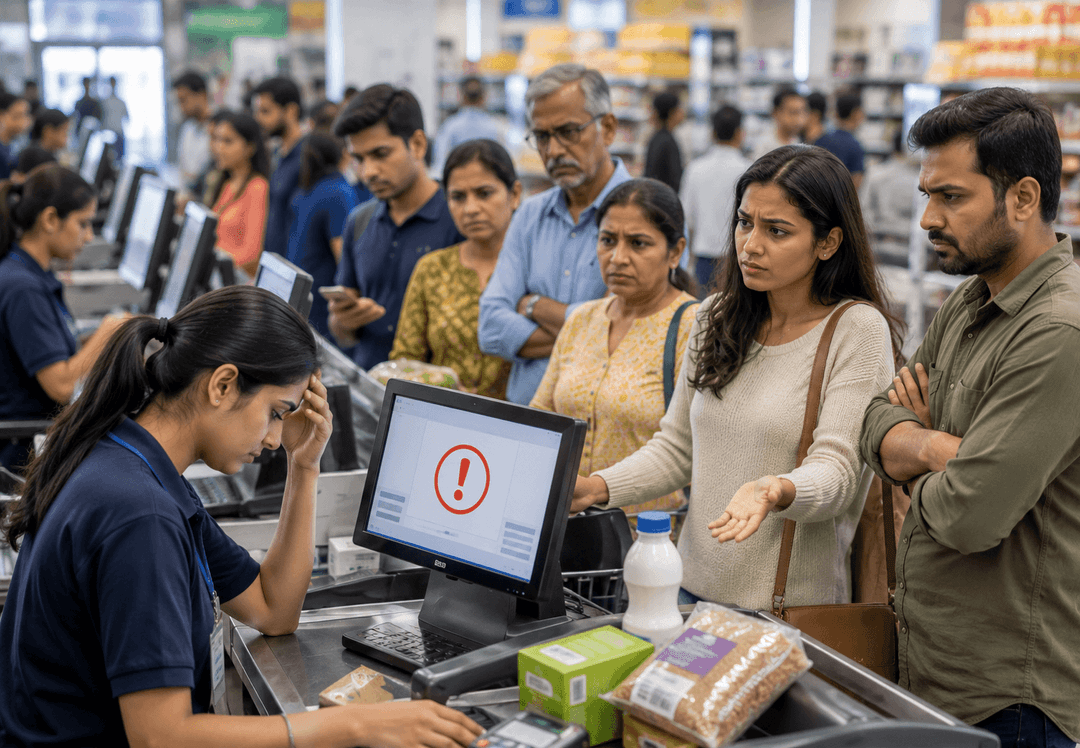
A single billing issue may seem minor. Hundreds of them across multiple stores are not. Store teams spend more time resolving disputes. Supervisors are repeatedly called to the billing counters. Checkout queues become longer during peak hours. The impact is not limited to operations.
Customers often lose patience. Some leave without completing their purchases. Others question the accuracy of pricing and promotions across the store. These situations directly affect the shopping experience and, in many cases, lead to lost sales that never appear in a report.
Retail operations today are connected in ways they were not a few years ago.
The same product information often feeds:
When incorrect information enters one system, the effect can spread across multiple parts of the business. That is why Product data management is no longer viewed as a back-office activity. It directly influences store operations, product availability, and customer experience.
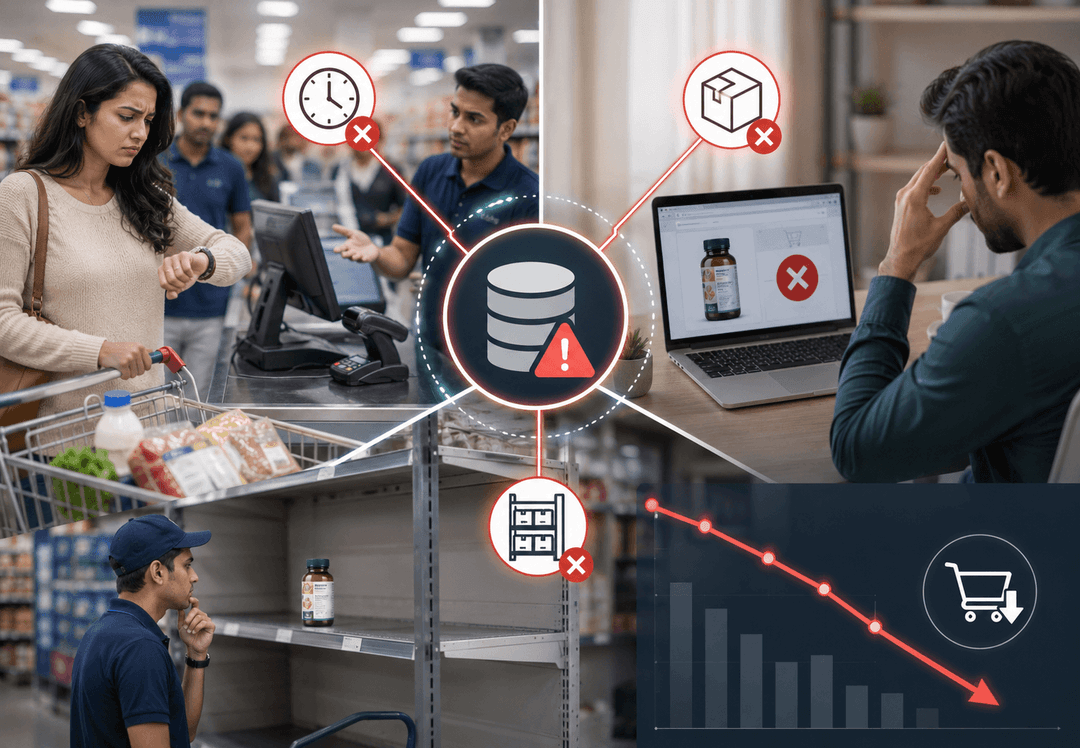
The biggest impact is often the one retailers do not immediately see.
These situations happen every day across retail networks. Retailers focusing on retail inventory management are increasingly looking at product information quality because they understand that every sale depends on accurate information moving through the business.
Pricing mismatches often occur when product information is not updated consistently across retail systems.
They increase waiting times, create frustration, and can lead to abandoned purchases.
Yes. Incorrect product information can affect stock visibility, replenishment planning, and inventory records.
POS systems rely on accurate product data to display correct pricing, descriptions, and promotional information.
By maintaining accurate product records and ensuring data consistency across all retail systems.
Your email address will not be published. Required fields are marked *