
In today's global supply chains, billions of products are transported daily. However, most consumers rarely consider how these items are identified, tracked, or managed. At the core of this seamless flow lies the GS1 barcode system, a global standard that ensures reliable product identification and tracking across various industries. So, what is GS1? What is GS1 barcode? These are critical questions to understand the backbone of modern commerce. This blog explains how the GS1 barcode system works, its essential role in supply chains, and how it enables smooth, efficient operations.
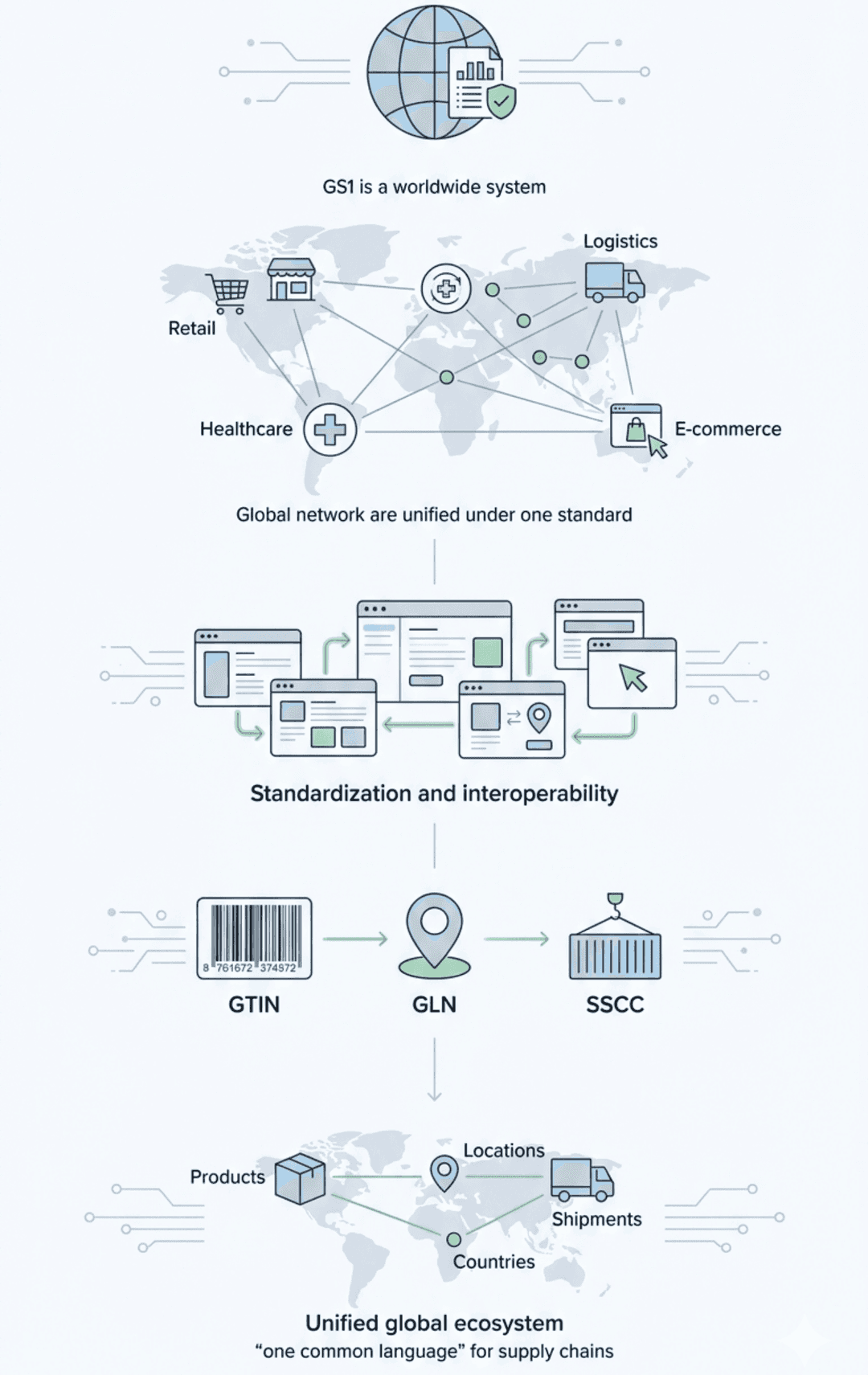
GS1 is a globally recognised, neutral standards organisation that develops and maintains supply chain standards used by millions of companies worldwide. Their mission is to enable the clear identification, capturing, and sharing of supply chain information.
GS1 standards are used across 150+ countries in industries like retail, healthcare, logistics, and e-commerce. These standards solve the complexity of global commerce by ensuring that systems from different countries, retailers, and technologies can “speak the same language.”
The GS1 system revolves around identifiers such as GTIN (Global Trade Item Number), GLN (Global Location Number), and SSCC (Serial Shipping Container Code) that streamline data flow across systems.
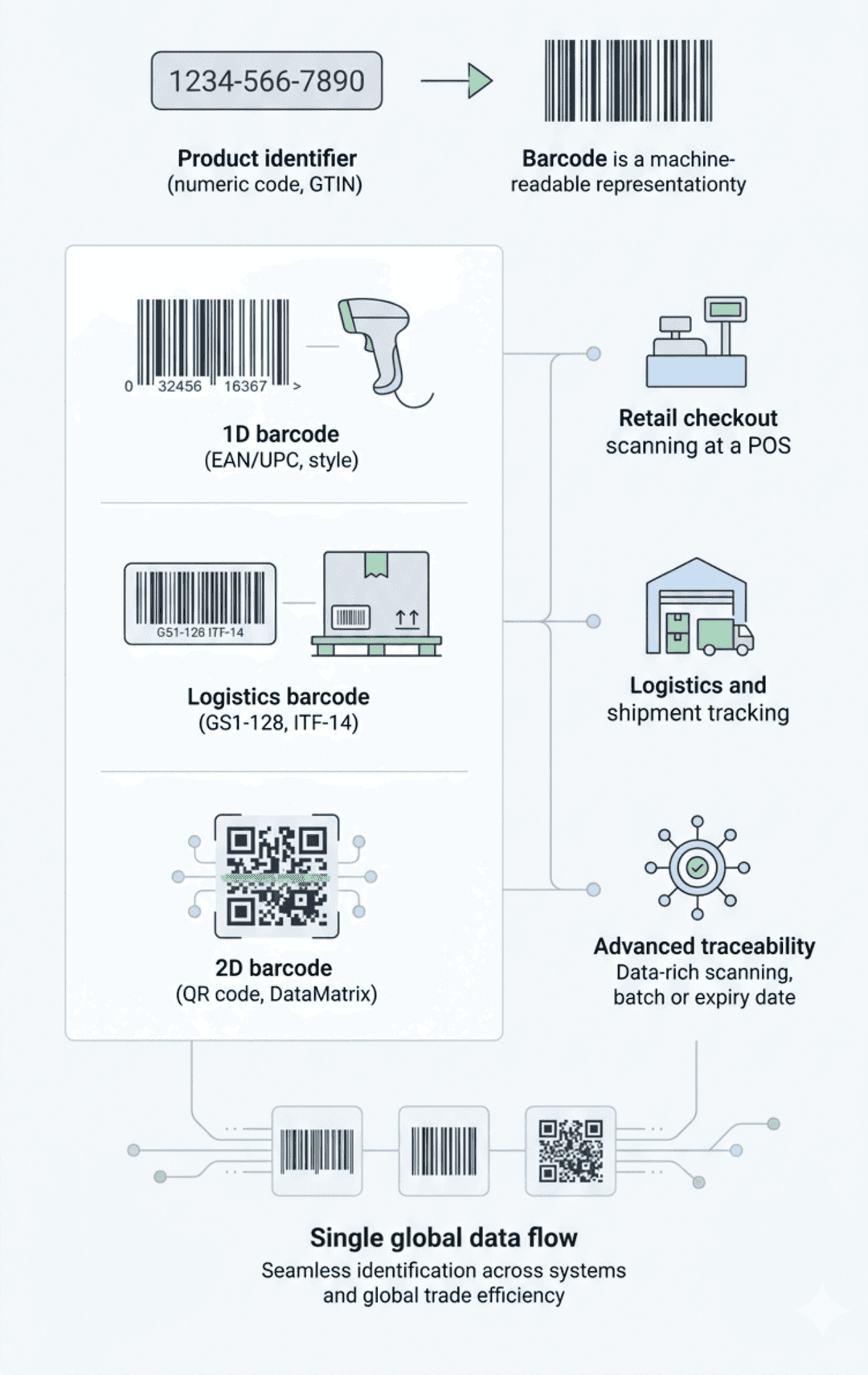
A GS1 barcode is a machine-readable symbol that encodes a unique product identifier, such as the GTIN. The barcode itself is not the product’s identity; it is simply a way for machines and systems to interpret that identity.
Some of the barcode types under the GS1 system include:
These standardised barcodes ensure products can be identified seamlessly across systems, making global trade more efficient.
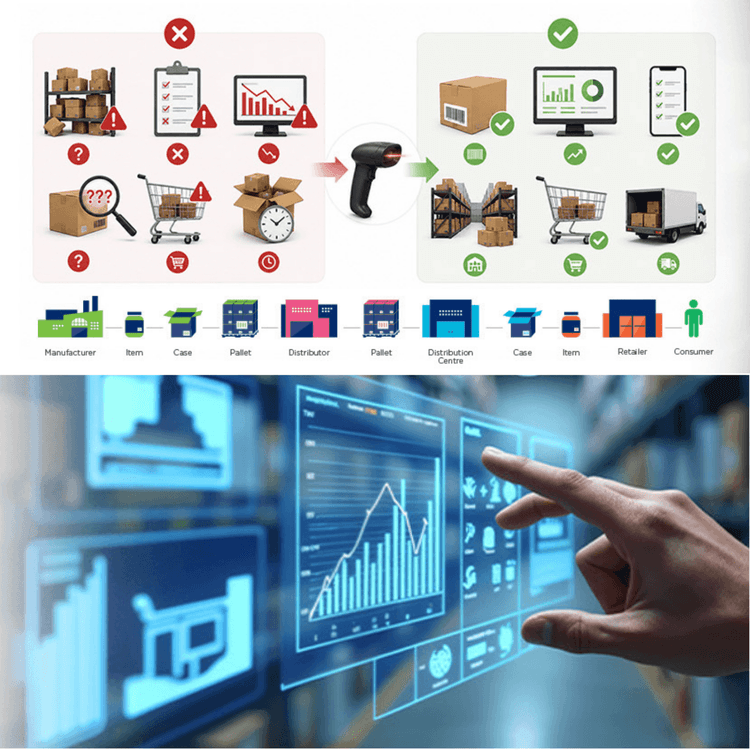
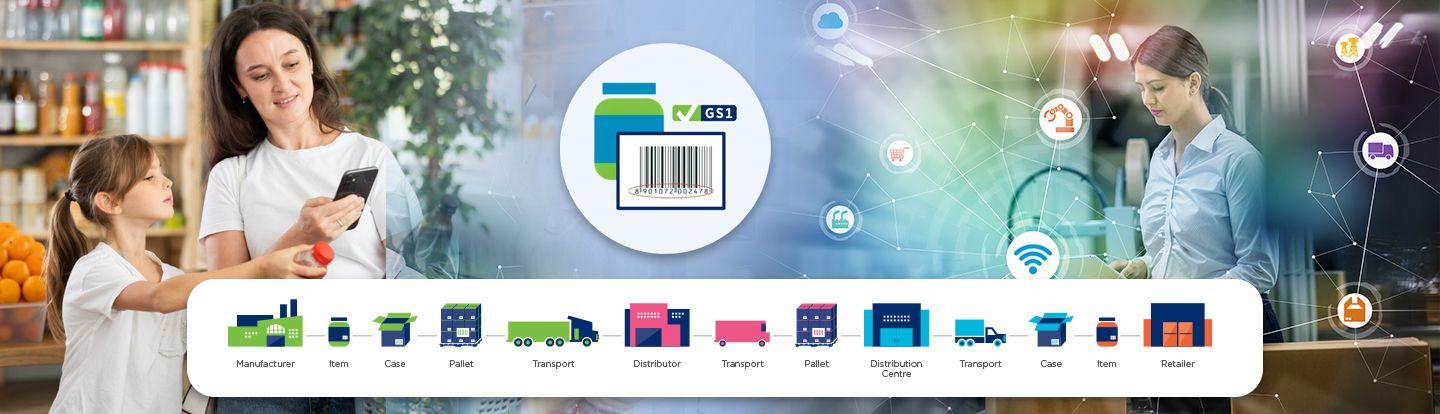
In modern, complex supply chains, the GS1 barcode system serves as the universal language for product identification and data exchange. Here’s how it works:
For example, when a retailer scans a barcode at checkout, the inventory system updates instantly, ensuring accurate stock levels.
By adopting the GS1 barcode system, businesses gain several advantages:
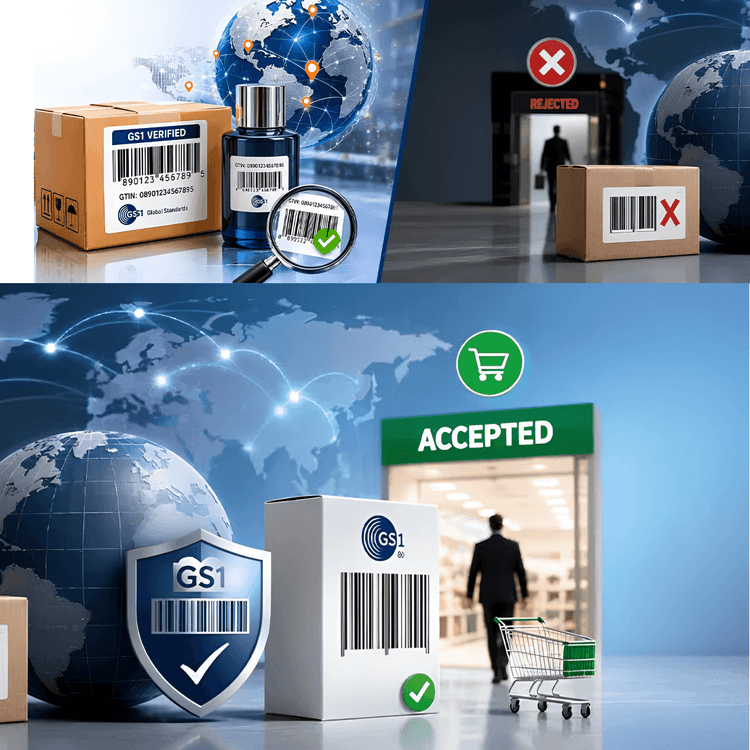
By ensuring the use of globally recognised identifiers, GS1 barcodes support smoother operations and facilitate expansion into new markets.
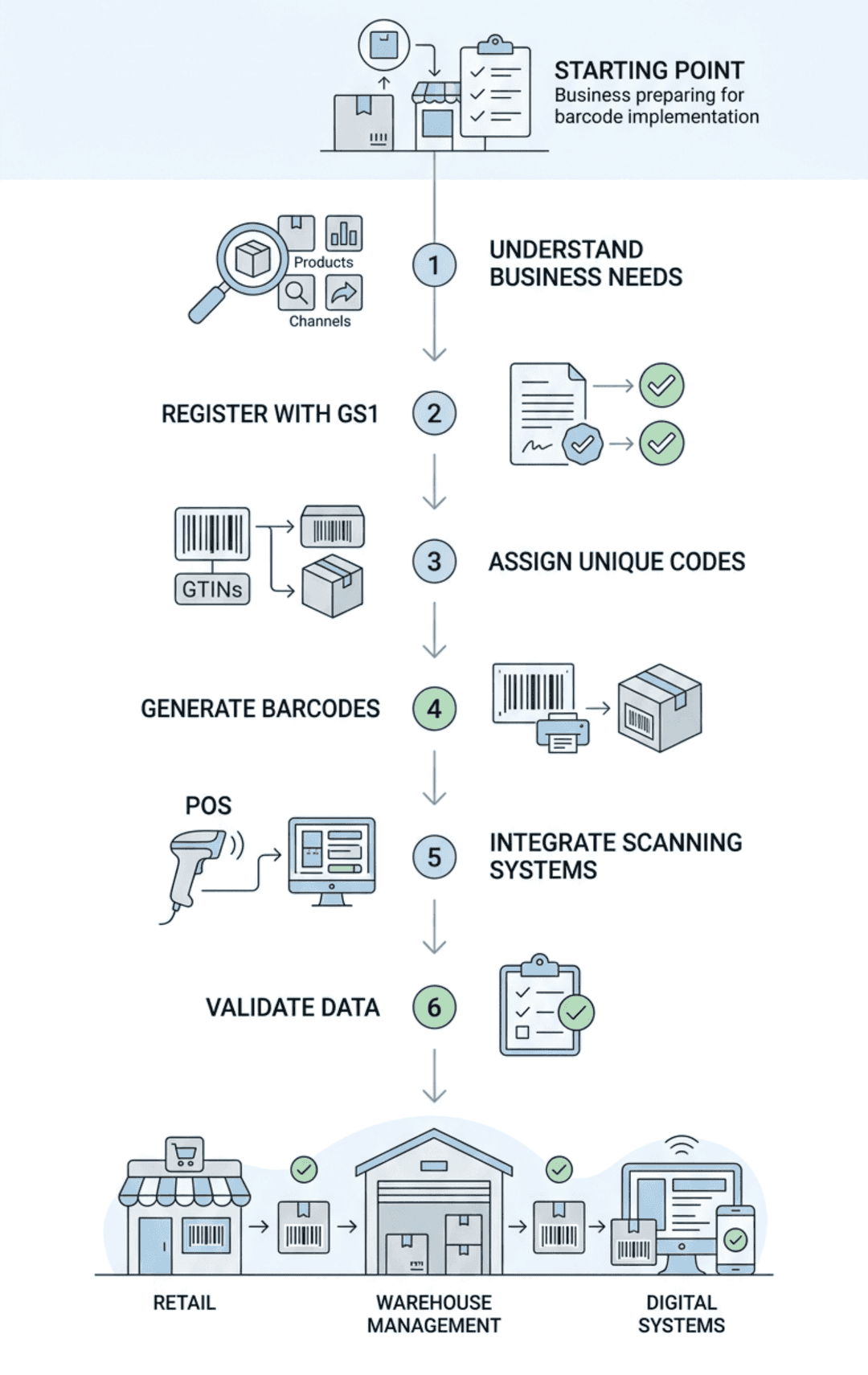
To get started with the GS1 barcode system, follow these steps:
Understand Your Business Needs: Identify the products, packaging levels, and channels that require barcodes.
By following these steps, you can implement a reliable barcode system that enhances your supply chain operations.
GTIN is the unique number, while a GS1 barcode is the visual representation of that number.
Global standards ensure consistency across systems, reducing errors and improving efficiency.
No, each product variant requires its own unique GS1 barcode.
By standardising product identification, GS1 barcodes enable seamless data exchange, improving tracking and inventory management.
Yes, most online marketplaces require GS1 barcodes for product listings and smooth operations.
Your email address will not be published. Required fields are marked *