

A product goes live on Amazon, but inventory numbers still do not match across platforms. One system shows stock available, while the quick commerce dashboard marks the item as unavailable. In some cases, orders continue coming in even after inventory runs out. For brands selling across marketplaces and quick commerce platforms simultaneously, this is becoming a common operational issue. The problem is often not inventory management itself. It is product identification. As retail systems become more connected, accurate product mapping plays a much bigger role in keeping inventory synced across warehouses, marketplaces, and fulfilment platforms. Even small barcode inconsistencies can create stock mismatches, listing confusion, and delayed replenishment updates. This is why businesses are paying closer attention to every amazon product barcode linked to their catalogue for better stock management. Because in quick commerce, inventory accuracy depends heavily on how well systems recognise the product in the first place.

Quick commerce platforms process inventory updates constantly.
Products move between warehouses, marketplace listings, retail systems, delivery platforms and seller dashboards. For these systems to stay aligned, product identifiers must remain consistent across every channel.
Problems usually begin when:
At that point, stock updates stop syncing accurately. This is where having a reliable barcode for product identification becomes operationally important rather than just a listing requirement.
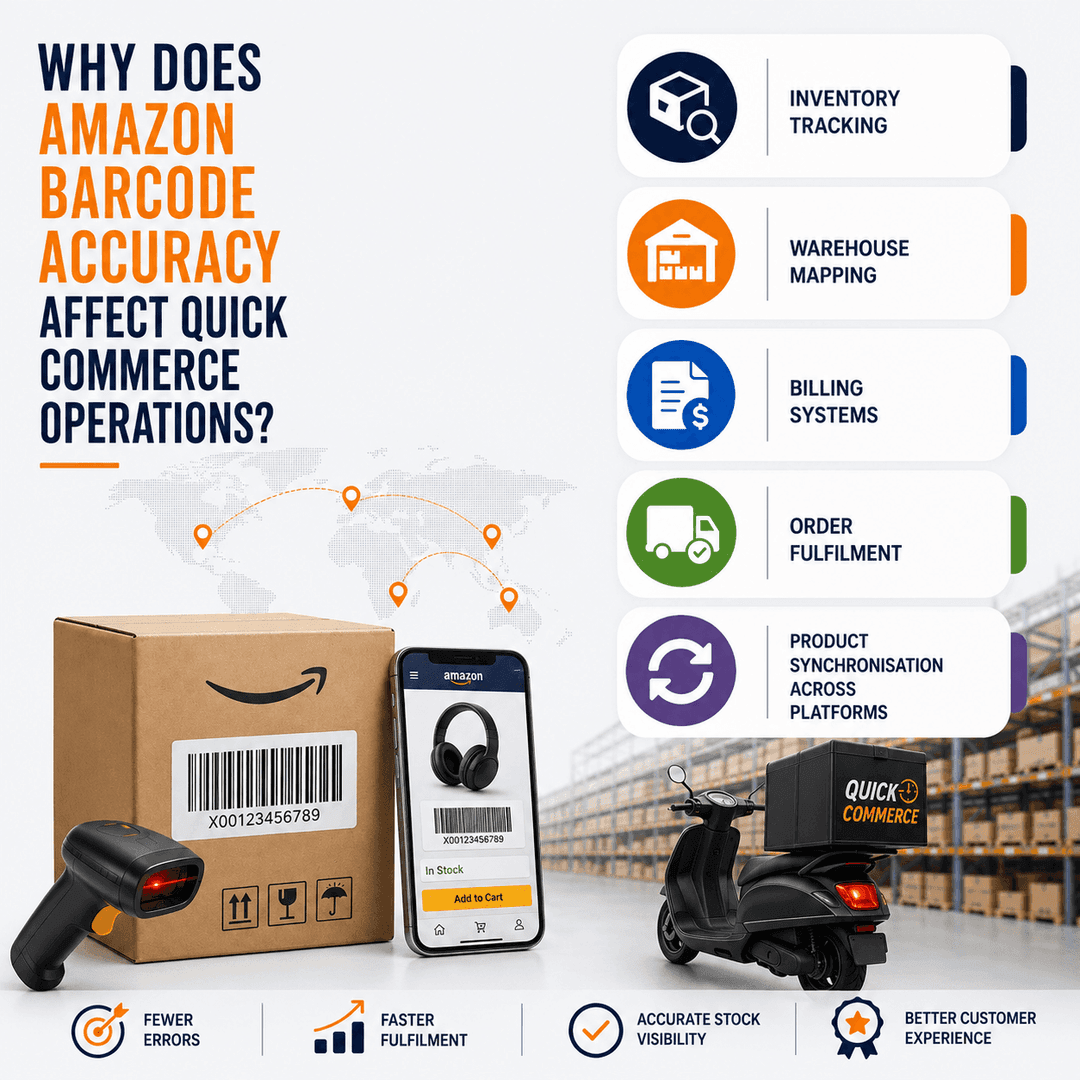
Most businesses treat marketplace barcodes as a listing formality. But in reality, those identifiers influence much more than product visibility.
A single amazon product barcode is often connected to:
If the barcode structure is inconsistent, the same product may appear differently across systems. That creates issues such as incorrect stock visibility, delayed inventory updates, duplicate product listings and fulfilment mismatches. In quick commerce operations, where fulfilment speed matters heavily, these gaps become visible very quickly.
Unlike traditional retail, quick commerce depends on near real-time inventory movement. Platforms need accurate product data because:
If the product identifier is unreliable, the system cannot maintain accurate inventory visibility. This is why platforms increasingly validate every barcode for product onboarding more carefully before allowing products to scale across fulfilment networks. The barcode itself may scan correctly, but the product data behind it also needs to remain structured and consistent.
Smaller brands usually notice these problems only after expanding into multiple channels. Initially, inventory corrections may seem manageable. But once products move across:
…manual corrections become difficult to sustain.
A product variant may sync correctly on one platform but fail on another because the product identifier does not match properly across systems. This is one reason businesses increasingly standardise every amazon product barcode before expanding catalogue operations across multiple retail channels. It reduces friction later when inventory volume increases.

The biggest improvement usually comes from maintaining consistent product identification from the beginning. That includes:
A properly structured barcode for product management system makes it easier for inventory updates to move consistently across marketplaces, warehouses, and quick commerce systems. More importantly, it reduces operational dependency on manual corrections later.
Accurate barcodes help platforms sync inventory correctly across marketplaces, warehouses, and fulfilment systems.
Yes. Incorrect barcode mapping can create stock mismatches, duplicate listings, and delayed inventory updates.
Platforms validate identifiers to maintain accurate inventory tracking, faster fulfilment, and smoother catalogue management.
Your email address will not be published. Required fields are marked *