
In India’s fast-growing sectors such as pharmaceuticals, perishables, and high-value foods, managing the cold chain goes far beyond logistics. It directly impacts product quality and brand credibility. A single temperature breach can compromise an entire shipment and damage trust built over years. This is where supply chain traceability intersects with cold chain operations. That intersection brings together product movement data, condition monitoring, and standardised identifiers to deliver full visibility. For temperature-sensitive goods, this convergence is no longer optional. Supply Chain Traceability becomes meaningful only when condition data travels with the product. Cold chain traceability in India is, therefore, critical for businesses operating in regulated and export-driven environments. In this blog, we explore what cold chain traceability means, why it matters for India, how global standards enable it, and how businesses can act now to secure visibility and growth.
Cold chain refers to the end-to-end temperature-controlled handling of specific goods. This includes manufacturing, storage, transportation, and distribution under defined temperature ranges. It is essential for pharmaceuticals, vaccines, biologics, fresh produce, and premium food products.
Traceability in this context means capturing every movement and condition change across the journey. It records who handled the product, when it moved, where it was stored, and under what conditions. For temperature-sensitive goods, this must include time-temperature exposure and handling events.
Supply Chain Traceability for cold chains goes beyond location tracking. It requires continuous condition monitoring to ensure product integrity is preserved. Without this, businesses risk spoilage, regulatory non-compliance, and financial losses.
Cold chain traceability in India is especially important due to the country’s scale. Large pharmaceutical exports, national immunisation programs, and growing food exports demand reliable visibility. Missing data can result in rejected consignments, recalls, or impact the brand’s reputation.
Key Challenges in Indian Cold Chains and Visibility Gaps
Cold chains in India often involve multiple hand-offs. Products move from farms or factories to packhouses, transporters, warehouses, and finally retailers or clinics. Each transition involves risk when data capture is inconsistent or manual.
Technology alone cannot solve traceability challenges. The foundation lies in consistent identification and structured event data. Global traceability standards provide this framework across industries and geographies.
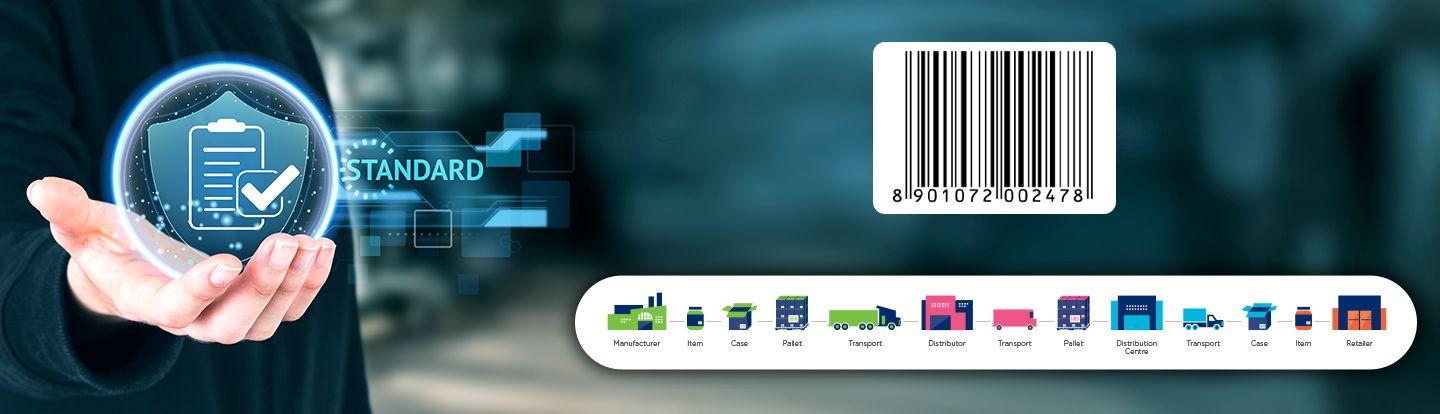
Standard identifiers uniquely label products, logistics units, and locations. Event data models define how movements and condition changes are recorded. Together, they capture the “who, what, when, where, and why” of supply chain activity.
For cold chains, event data can also include sensor readings such as temperature and time. These readings are linked to specific shipments and locations, enabling real-time monitoring. This allows early intervention when conditions deviate from acceptable ranges.
Implementing cold chain traceability requires a structured approach. Businesses should begin by understanding their own operations and critical risk points.
Step 1: Map the complete cold chain flow. Identify temperature-sensitive transitions, storage points, and hand-offs where risk is highest.
Step 2: Assign standard identifiers to products, packaging levels, logistics units, and locations. This creates a consistent reference across systems and partners.
Step 3: Deploy condition sensors for temperature and humidity. Link sensor data to logistics units and shipments through structured event capture.
Step 4: Onboard partners such as transporters, warehouses, and distributors into a shared traceability platform. This ensures data flows both upstream and downstream.
Step 5: Monitor dashboards and alerts. Track temperature excursions, delays, and expiry risks in near real time.
Step 6: Use traceability records to demonstrate compliance and unlock new export opportunities. Cold chain traceability in India increasingly acts as a market access enabler.
The commercial benefits of cold chain traceability extend beyond risk mitigation. Businesses experience tangible improvements across operations and market engagement.
Key outcomes include:
Cold chain traceability in India also strengthens trust across the ecosystem. Partners and customers gain confidence when visibility is transparent and verifiable. This directly supports growth in competitive domestic and international markets.
Cold chain traceability includes condition monitoring, not just movement tracking, for temperature-sensitive goods.
They enable consistent identification of products, locations, and shipments across partners.
It ensures product integrity by recording exposure to defined temperature ranges.
Yes, phased implementation and shared platforms reduce cost barriers.
Pharmaceutical, food, and biologics markets increasingly require documented cold chain compliance.
Your email address will not be published. Required fields are marked *