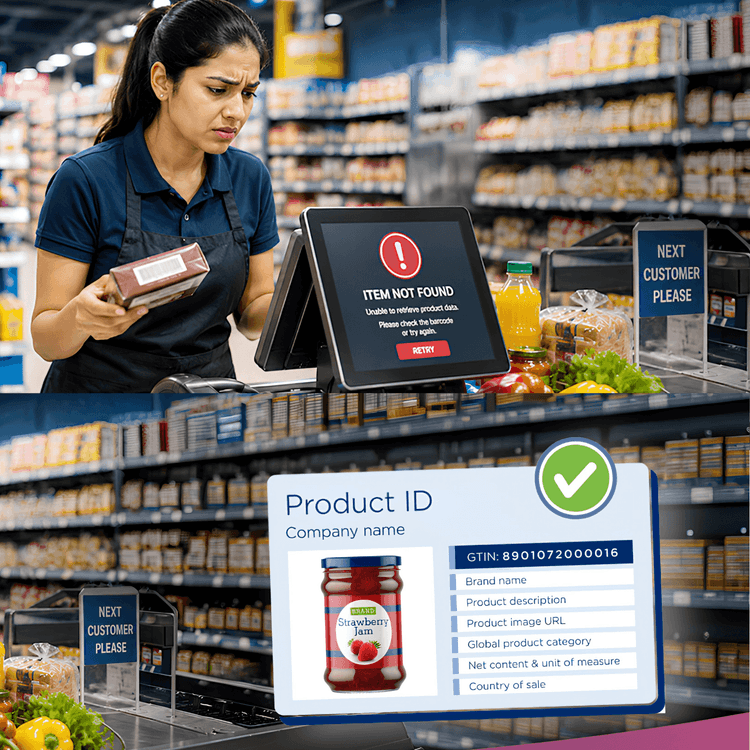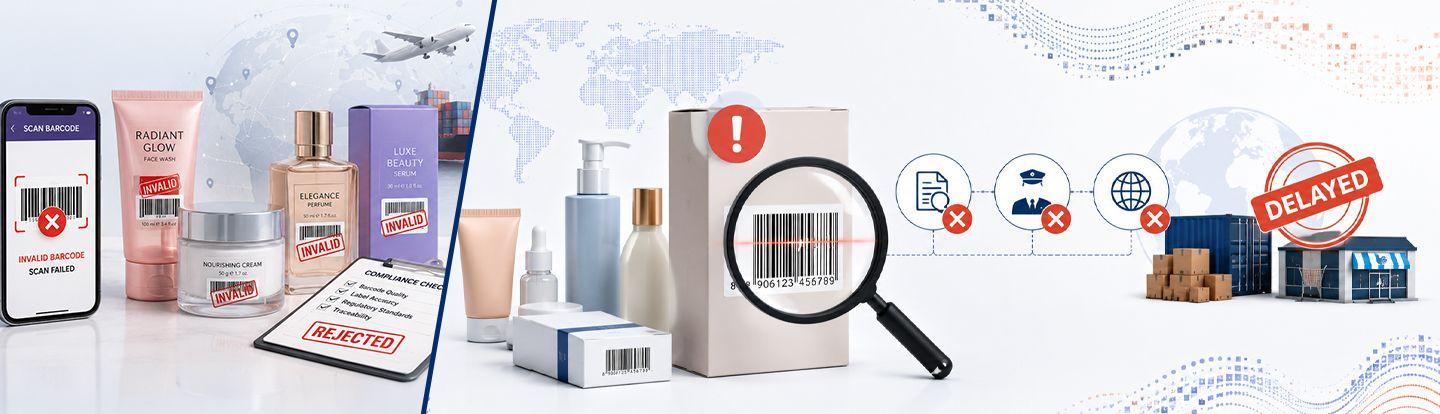

A cosmetic product may be fully ready for launch, packaging approved, inventory stocked, marketplace listings prepared, and still face delays during retail onboarding or export processing. In many cases, the issue is not the product itself. It is the product data attached to it. Retailers, distributors, and export partners increasingly rely on standardised product identification to process inventory accurately across systems. When barcode information is inconsistent or incorrectly assigned, approvals slow down quickly. This is why businesses entering modern retail and international markets are paying closer attention to every barcode for cosmetic products used across their catalogue. Because once products start moving across multiple systems, small identification errors become operational problems.

Retail and export approvals depend heavily on data accuracy. Before products are listed or shipped, retailers and distribution partners usually validate:
If the barcode assigned to a product does not align correctly with the associated data, the onboarding process often pauses until the mismatch is resolved. For cosmetic brands managing multiple SKUs, this becomes a common challenge during expansion. A product variant may scan incorrectly, map to outdated information, or fail to match retailer catalogue requirements. This is where a structured cosmetic barcode system becomes important. Accurate product identification helps reduce onboarding confusion across retail and export channels.

Cosmetic products typically involve multiple variants across:
That complexity increases the risk of incorrect product mapping if identifiers are not managed carefully. At the same time, cosmetics also operate in a category where traceability and product accuracy matter significantly. Retailers and export partners need product data to remain consistent from warehouse systems to marketplace listings and shipping documentation.
Even small mismatches can create delays during verification. This is one reason businesses increasingly prioritise a reliable barcode for cosmetic products early in the product lifecycle instead of treating barcode assignment as a final packaging step.
Export operations rely on clean and standardised product information. When shipment documentation, inventory records, and product identifiers do not align correctly, customs processing and distributor approvals can slow down.
In some cases:
These delays affect more than operations. They impact launch timelines and inventory movement as well. A properly structured cosmetic barcode system helps maintain consistency across export documentation, retail systems, and inventory platforms, reducing the chances of repeated verification requests later.
Retail systems today process thousands of products across multiple suppliers and channels simultaneously. Because of that, retailers rely heavily on standardised product identifiers. It is to maintain catalogue accuracy and inventory visibility. If product data is inconsistent, the issue does not remain isolated to one listing.
It can affect:
This is why retailers increasingly prefer suppliers using globally recognised identification standards and consistent product data structures. For cosmetic brands, using a reliable barcode for cosmetic products is becoming less about operational convenience and more about retail readiness.
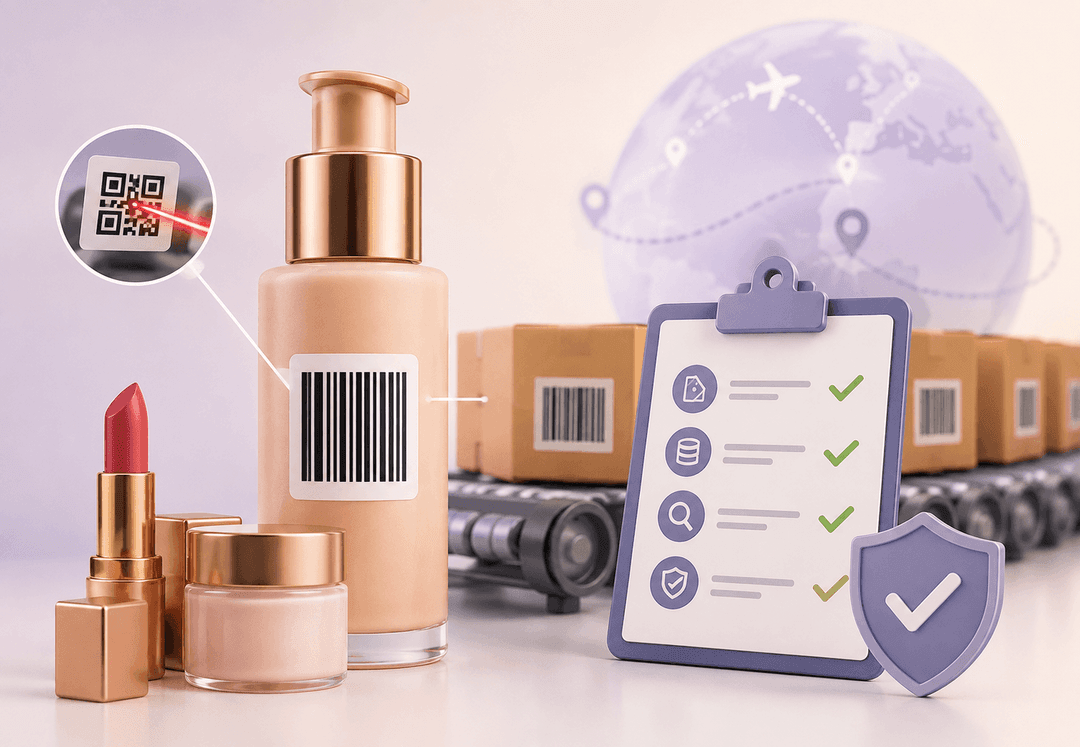
The biggest improvement usually comes from structuring product identification correctly from the beginning.
That includes:
A properly managed cosmetic barcode structure helps products move more smoothly across retail, warehouse, and export systems without repeated corrections or verification delays. As cosmetic brands scale across marketplaces and international channels, operational consistency becomes increasingly important.
Barcode errors create product data mismatches, which can pause retail onboarding and export verification.
Cosmetics have many variants like shades, sizes, and packaging types, so each product needs correct identification.
Brands should assign unique barcodes, keep product data consistent, and validate catalogue details regularly.
Your email address will not be published. Required fields are marked *