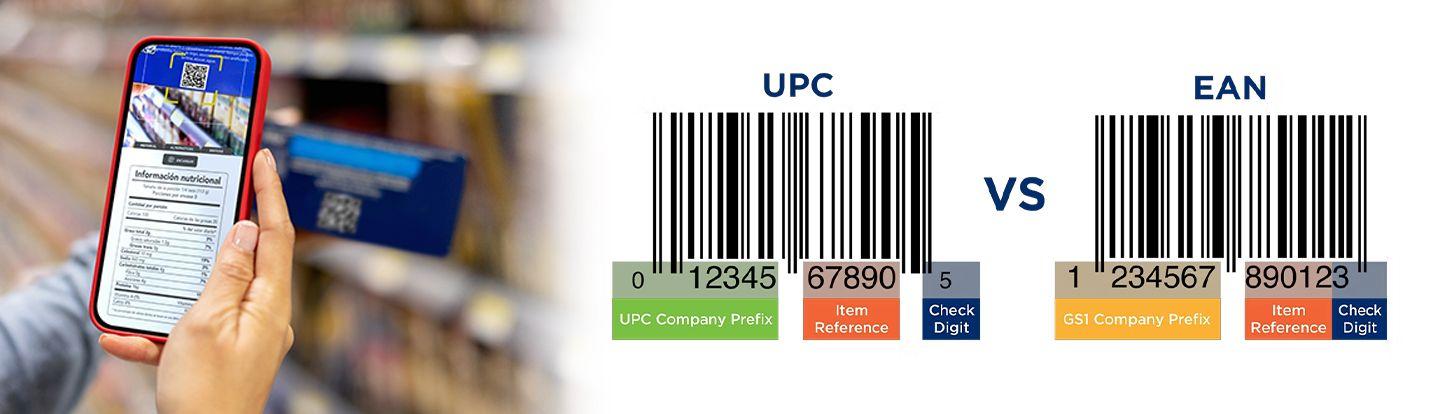

Imagine an instance wherein, you are preparing to launch a product online or expand into export markets, and suddenly a platform asks for an EAN or UPC. At first glance, both codes look similar, which often creates confusion. This confusion is common across global marketplaces and retail systems. Misunderstanding barcode requirements can disrupt product onboarding and supply chain integration. Knowing the difference between EAN and UPC is essential for businesses looking for smooth listings and faster market entry. In this blog, you will learn what EAN and UPC are, how they differ, how to validate your EAN correctly, and why this matters for Indian brands selling locally and internationally. Let’s begin by understanding what these codes represent within global product identification systems.
UPC stands for ‘Universal Product Code’ and is a barcode format widely used in North America. It typically consists of 12 digits and is encoded in a linear barcode symbol. UPCs are commonly used for retail products sold in the United States and Canada. Retail checkout systems in these regions are optimised to scan this format efficiently.
EAN stands for ‘European Article Number’, and usually consists of 13 digits and is used across Europe, Asia, and most global markets outside North America. EAN barcodes are designed to support international trade.
Both EAN and UPC are used to uniquely identify retail products. They help systems recognise products quickly and accurately at checkout points, warehouses, and online platforms. Even if you manufacture products in India, you may encounter both formats depending on the target market.
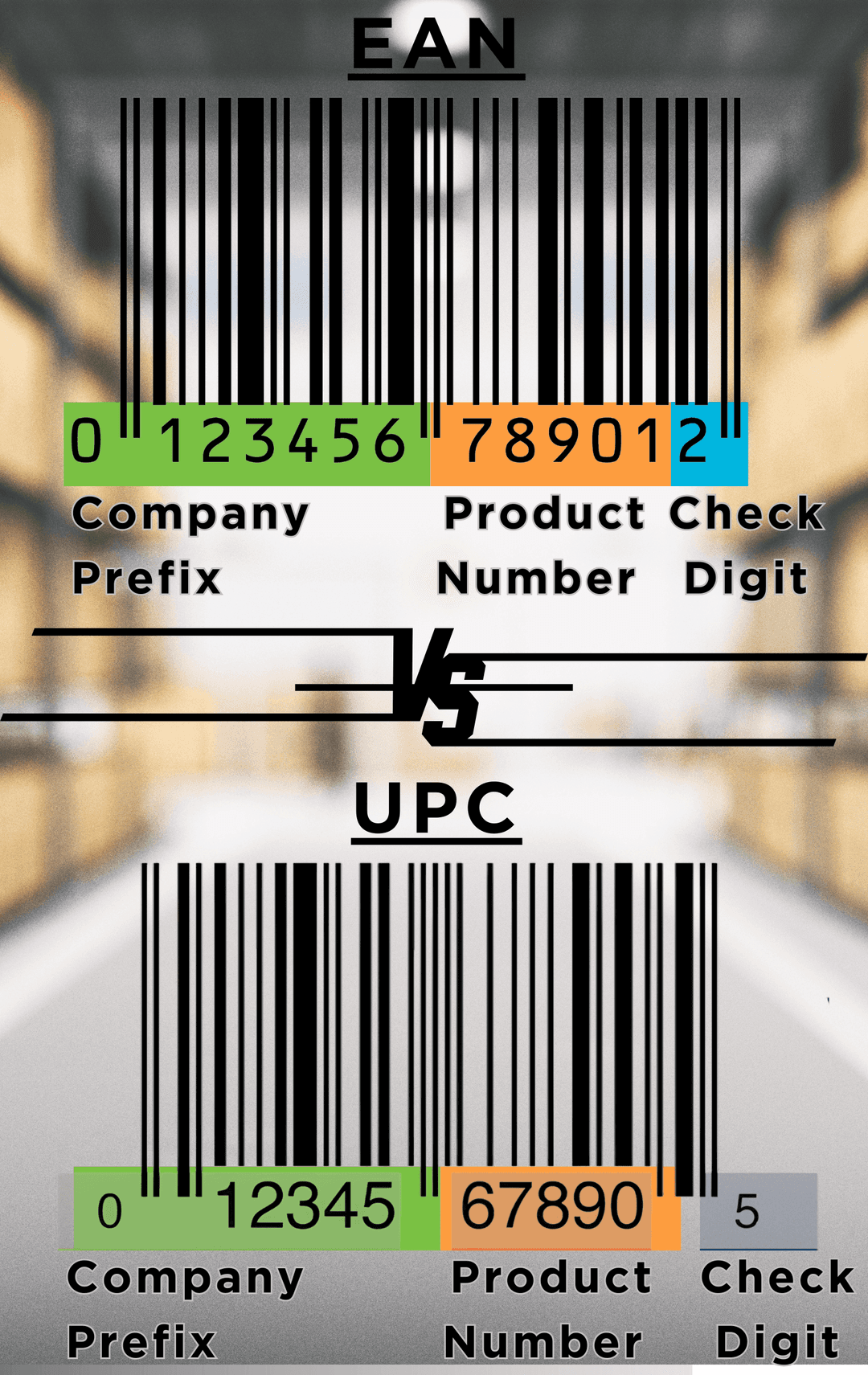
The difference between EAN and UPC primarily lies in their structure and geographic usage. Although both codes serve the same purpose, their formats are not identical. Understanding these distinctions helps businesses choose the correct barcode and avoid technical errors during listing.
One of the most visible differences is digit length. UPC codes contain 12 digits, while EAN codes contain 13 digits. This structural difference often leads to confusion during marketplace onboarding.
Geographic usage is another key distinction. UPC is predominantly used in North America, while EAN is accepted globally. Despite this, modern retail systems can scan both formats. From a systems perspective, they are interoperable under global standards.
Brands get EAN numbers from their DataKart interface so validation is not required. Retailers and online marketplaces can do EAN number check using GTIN validation services. GTIN Validation service helps retailers and other data aggregators validate product GTINs quickly, accurately and efficiently. The service is powered by DataKart which is the national product data repository.
Indian brands typically use globally accepted barcode formats that work across domestic and international markets. While most Indian products carry 13-digit codes, international retailers may still reference UPC or EAN terminology during onboarding. This makes clarification essential.
Export-focused businesses must ensure their barcode format is compatible with target markets. Some platforms may request UPC, while others accept EAN without issue. Knowing the difference between EAN and upc helps businesses respond correctly to these requirements.
Using unauthorised barcode resellers can create long-term risks. Duplicate or invalid codes may work temporarily, but often lead to delisting later. Valid, globally recognised codes reduce friction and improve trust across supply chains.
EAN uses 13 digits and is globally accepted, while UPC uses 12 digits and is primarily used in North America.
Yes, but compatibility depends on the destination market and platform requirements.
An EAN number always contains 13 digits, including a check digit.
In many cases, a leading zero can be added to convert it into an EAN-compatible format.
You can use GTIN validation services by GS1 India to perform an EAN number check and confirm accuracy.
Your email address will not be published. Required fields are marked *