

A shipment arrives at the warehouse on schedule, yet the team spends the next two hours fixing an incorrect quantity in the receiving record. A distributor has the right stock but cannot confirm where it came from. A retailer receives products late because one update was missed between dispatch and delivery. None of these problems necessarily come from slow transportation. They come from friction. For manufacturers, distributors, retailers, and logistics partners, these small inefficiencies accumulate across thousands of daily transactions. Extra calls, repeated data entry, manual reconciliation, emergency shipments, and avoidable stock movements may each look manageable in isolation. Together, they become a high operating cost. The smarter question is therefore not simply how quickly a supply chain can move. It is how much unnecessary work it can remove.
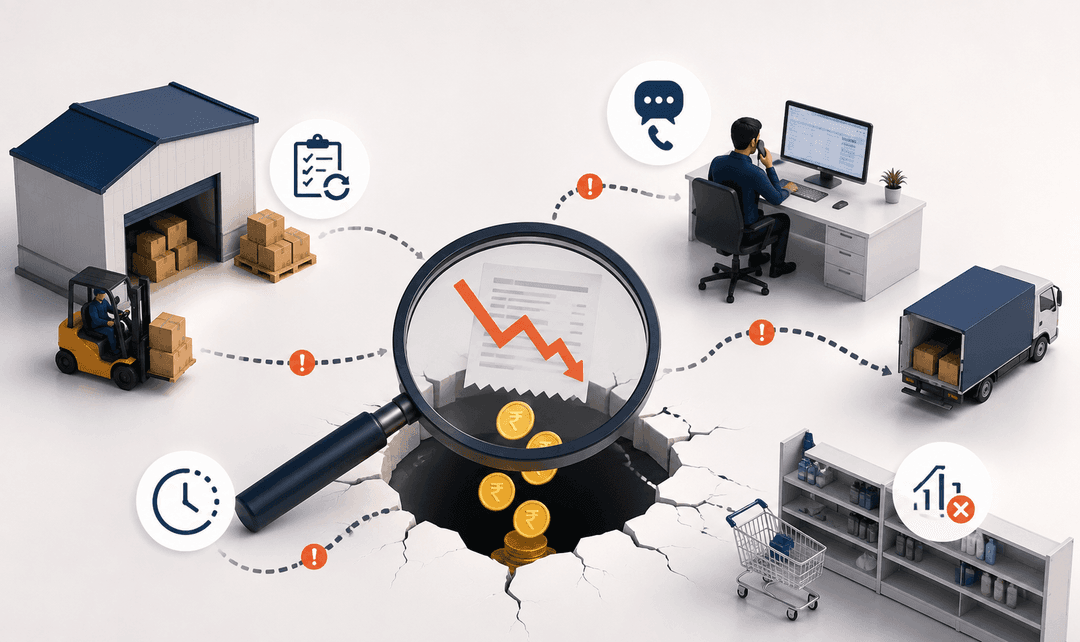
Some of the highest costs are hidden inside routine activities.
A warehouse employee checks the same shipment details twice. A distributor calls a supplier because dispatch information has not been updated. A retailer orders additional stock because the available quantity in its records cannot be trusted. These actions rarely appear as separate line items on a financial report.
Yet they consume employee time, increase handling, delay decisions, and create opportunities for errors.
For businesses managing large product portfolios, these inefficiencies multiply quickly. Better supply chain management is therefore not only about improving delivery speed. It is also about identifying where repetitive work and information gaps are adding cost.
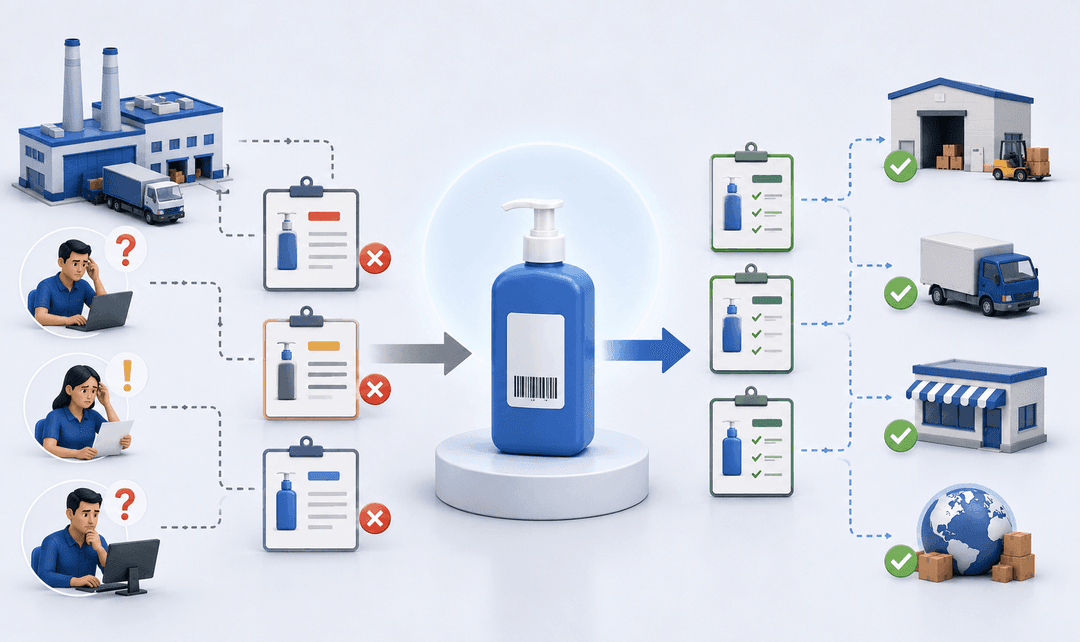
Consider a manufacturer supplying the same products to multiple distributors.
If product descriptions, pack configurations, identification details, or shipment information differ between trading partners, teams may have to verify basic information repeatedly. A seemingly minor mismatch can delay receiving or require manual correction before inventory can be released.
The problem becomes larger as businesses expand across marketplaces, modern retail, exports, and direct distribution. Reliable product information gives different teams a common reference point. It also reduces the need to repeatedly check whether two records actually refer to the same product.
Technology cannot compensate for processes that are unclear or information that is inconsistent. Before introducing new supply chain solutions, businesses should identify where operational teams lose the most time.
Is the problem at receiving bay? Is product information being entered repeatedly? Are shipment updates reaching partners late? Are teams using different records for the same products? Are stock movements difficult to reconcile?
Answering these questions helps businesses target the actual source of inefficiency rather than adding another platform to an already complicated operating environment.
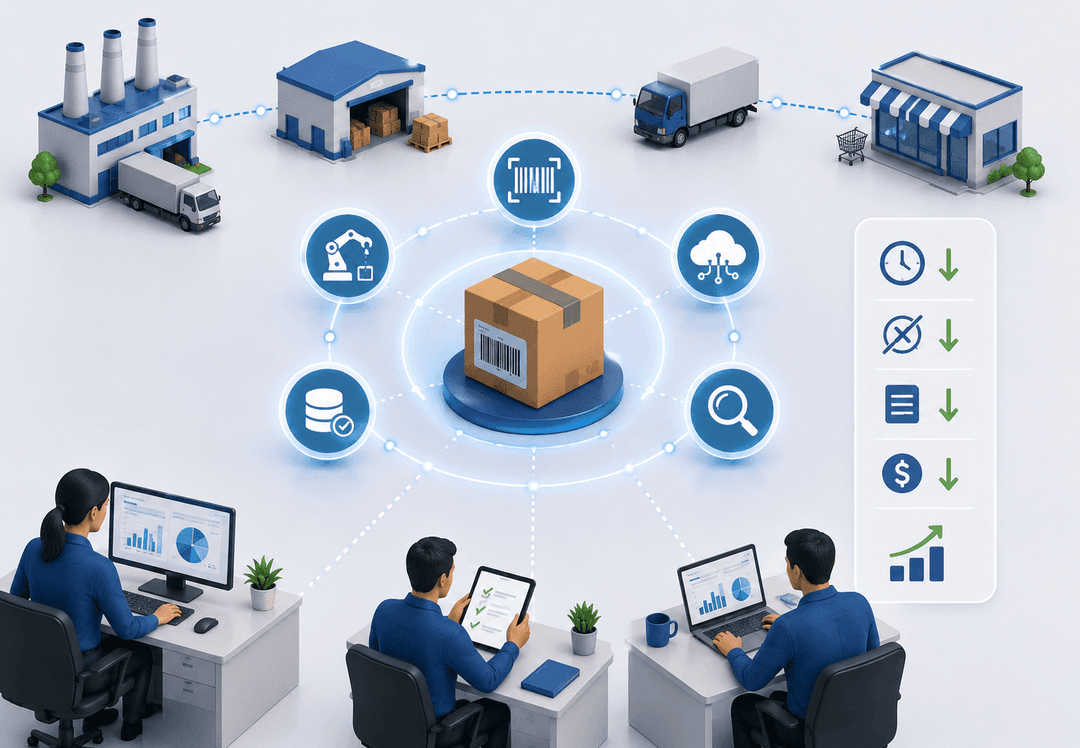
The strongest technology investments are usually connected to measurable operational problems. Automation can reduce repetitive data entry. Better identification can reduce confusion between similar products. Connected information can improve coordination between manufacturers, warehouses, distributors, and retailers.
Businesses evaluating supply chain technologies should therefore look beyond dashboards and automation features. The more important question is whether the technology helps employees spend less time searching, checking, correcting, and following up. That is where efficiency becomes a financial benefit.
Manual data entry, repeated verification, emergency shipments, stock transfers, and delayed decisions can quietly increase operating costs.
It reduces repeated checks and corrections while helping different teams work from consistent information.
Yes. Better visibility can help businesses avoid unnecessary replenishment, emergency transfers, and excess stock caused by poor information.
No. Identifying operational bottlenecks first helps businesses choose technology that addresses genuine problems rather than adding unnecessary complexity.
They can track metrics such as manual interventions, order errors, reconciliation time, stock transfers, fulfilment delays, and exception rates.
Your email address will not be published. Required fields are marked *