
A lot of growing brands do not struggle because of product demand. They struggle because their product information starts breaking as operations expand. A product launches with one SKU, then quickly becomes five variants. Retail channels increase, marketplace listings multiply and packaging changes. Suddenly, teams are managing spreadsheets, updating records manually, and fixing mismatched product information across platforms. This is usually the point where brands realise they are no longer managing products; they are managing product data. That shift is exactly why 2D barcodes are getting more attention. Unlike traditional barcode formats that mainly identify products, 2D barcodes can support richer product-linked information while helping brands manage complexity as they scale.
In the early stages, managing product information feels simple. A few products, limited channels, and smaller inventory volumes, but business growth changes quickly.
Brands start operating across:
At that stage, maintaining consistent product information becomes difficult. Product descriptions change. Variant data increases. Different teams begin updating records separately. The result is usually inconsistent product visibility and slower operational decisions.
This is also the point where many businesses realise they do not simply need a barcode; they need a more scalable way to connect product information across systems.
Traditional product identifiers continue to play an important role. But as product data becomes richer, businesses are looking for better ways to connect products with information without increasing operational complexity. 2D barcodes help create stronger links between products and structured information.
That information may support:
For fast-growing brands, this creates operational flexibility without continuously redesigning internal processes.
Instead of treating a barcode for product identification as a static requirement, brands start using it as part of broader product information management.
Many businesses start by asking questions like how to create barcode for product. But that question only solves the first stage. The bigger challenge appears later.
As operations grow, brands need product information to remain consistent across inventory systems, retail channels, and customer touchpoints. That requires a more structured approach to identification and information management. 2D barcodes support that transition by helping products carry more connected and usable information across the business ecosystem.
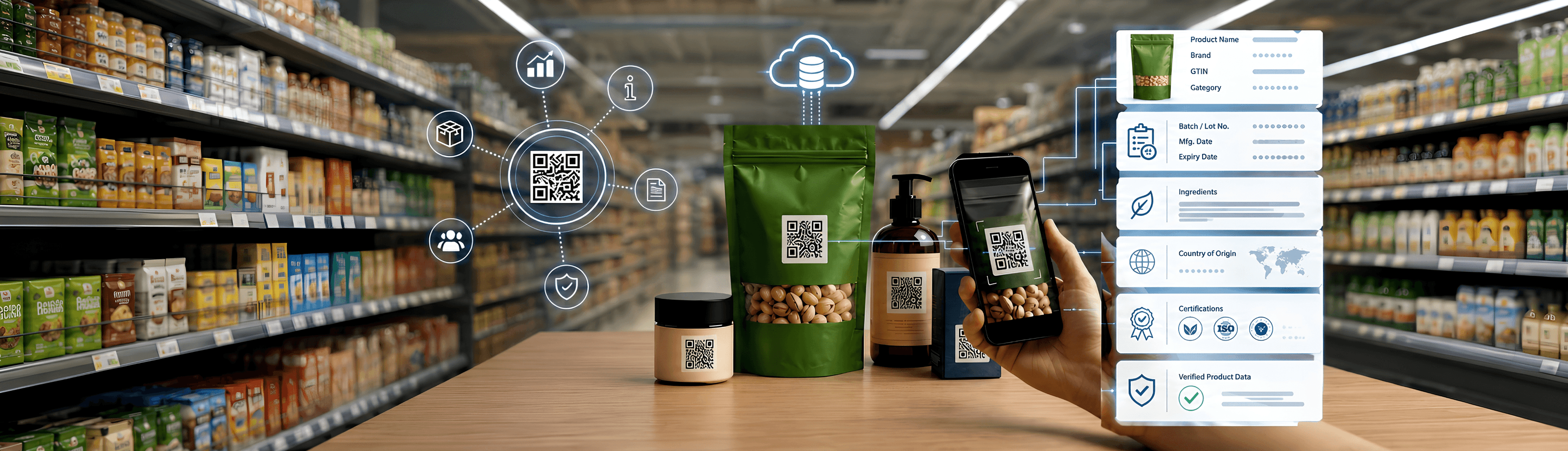
Beyond operational efficiency, 2D barcodes are also changing how consumers interact with products. A simple scan can provide access to information that traditionally remained hidden on packaging or scattered across different channels. Depending on the product category, consumers may be able to view ingredient details, nutritional information, usage instructions, authenticity information, promotional content, or sustainability-related data. As buyers become more conscious about what they purchase, brands are increasingly using 2D barcodes to create greater transparency and build trust beyond the point of sale.
2D barcodes can support richer product-linked information in a more compact format.
They help manage increasing product information across multiple channels.
Yes, they can improve visibility and information consistency.
They help maintain cleaner product data across retail systems.
They complement existing identification while supporting richer information management.
Your email address will not be published. Required fields are marked *