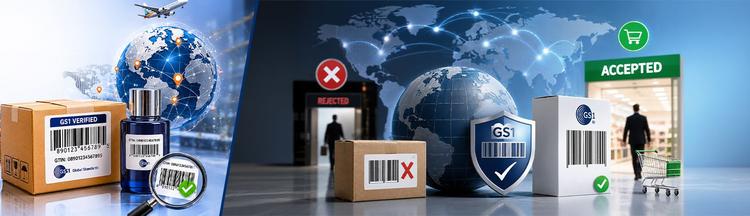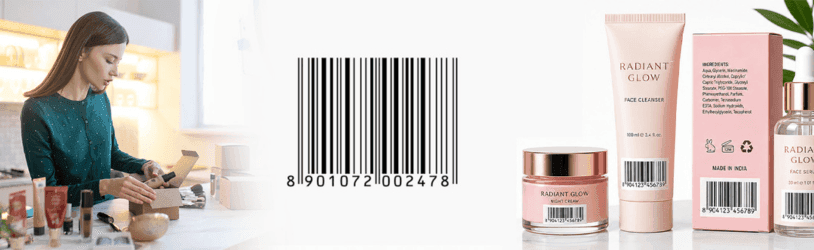

You can have the perfect formulation, thoughtful packaging, or a brand story that actually connects. But the moment you try to sell, online or in-store, you hit a different kind of barrier, such as “the listing doesn’t go live”, “a retailer asks for product identifiers”, a distributor pauses onboarding”, etc. That is usually when it becomes clear. Your product isn’t being evaluated for quality; it is being evaluated for readiness, and that readiness starts with something deceptively simple: a valid cosmetic barcode. Because in cosmetics, your product isn’t recognised to the system until it is identifiable.
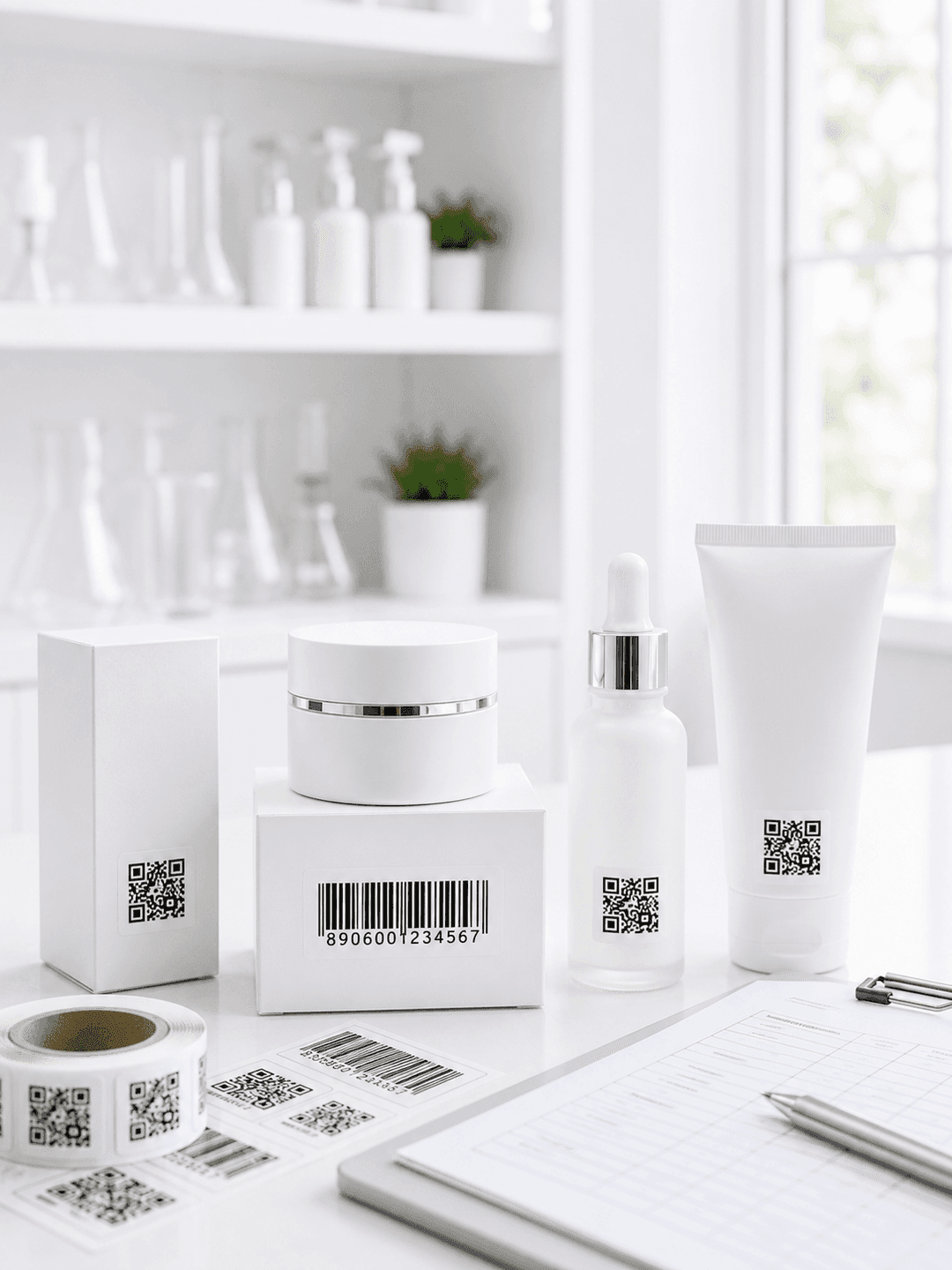
Most of the new brands prepare for customer-facing challenges like pricing, positioning, and visibility. The friction shows up elsewhere. A marketplace flags your product ID without much explanation. A retail partner asks for standardised identifiers before even discussing placement. These are not just obstacles; they are filters. And if your product doesn’t pass them, it doesn't move forward. In some cases, non-compliant products can be removed from shelves or blocked from export markets. Without a proper barcode for cosmetic products, your product exists, but not in a way systems can recognise or trust.
Common compliance gaps brands face:
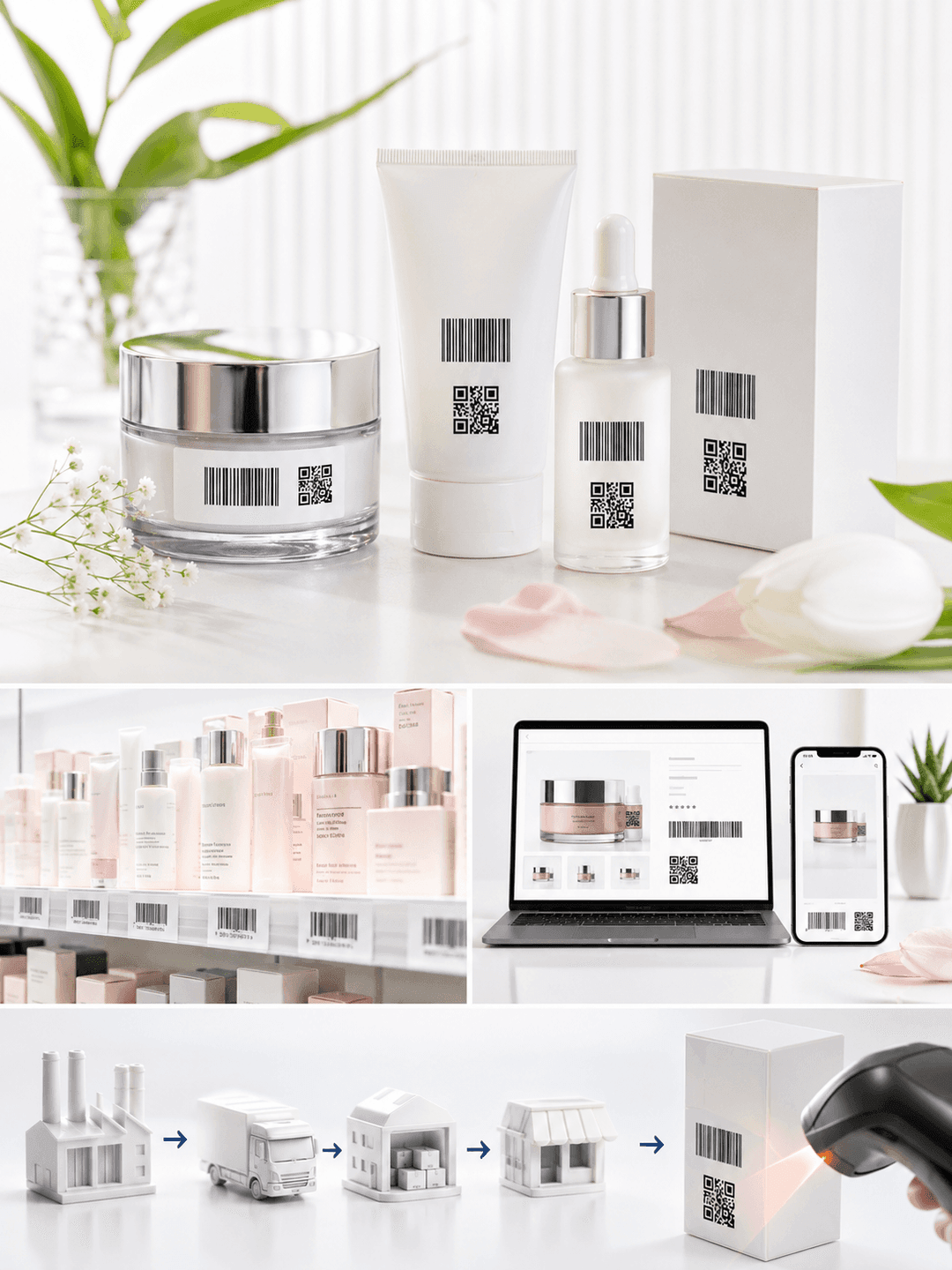
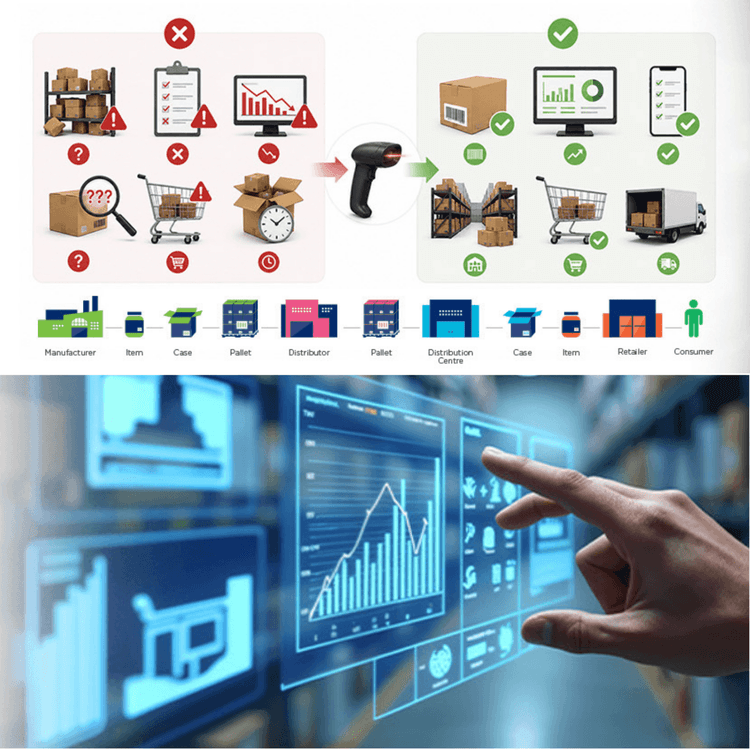
Cosmetic products move through a tightly connected chain: manufacturers, warehouses, distributors, retailers, and sometimes regulators. At each stage, products are not “understood”; they are scanned, logged, and verified. That is where many brands get caught off guard. They have built something ready for customers, but not ready for the systems.
A barcode connects your product to structured data. It ensures that wherever your product goes, it carries the same identity with it. Without that consistency, even the basic processes start slowing down. A cosmetic barcode is not just a visual code. It represents a unique product identifier linked to critical information such as product type, variant, and manufacturer details. This is what systems actually read and validate across retail and supply chains.
What systems actually use barcodes for:
Retail does not operate on interpretation; it operates on precision. When a retailer or marketplace receives your product data, it is processed through systems that expect standardised identifiers. There is no manual correction, no second-guessing. If your product lacks a reliable barcode for cosmetic products, the process stalls right there. This is why some brands spend weeks trying to understand why listings are delayed or rejected, only to realise the issue wasn’t the product, but how it was identified. And by that time, momentum is already lost.
Traceability often feels like a “later” problem, something to worry about once you scale. But in cosmetics, it shows up earlier than expected. A batch discrepancy, a quality check, a partner asking for origin details; at that point, you need answers and not assumptions.
A structured barcode system allows you to trace products across their journey, where they came from, where they are going, and what they are linked to. Without it, tracing becomes manual, slow, and uncertain. And uncertainty is expensive.
A barcode for cosmetic products helps:
For example, if a batch has quality issues, traceability lets you isolate and remove only affected units, saving costs and protecting consumer trust. This directly impacts brand trust, especially when customers question product authenticity.
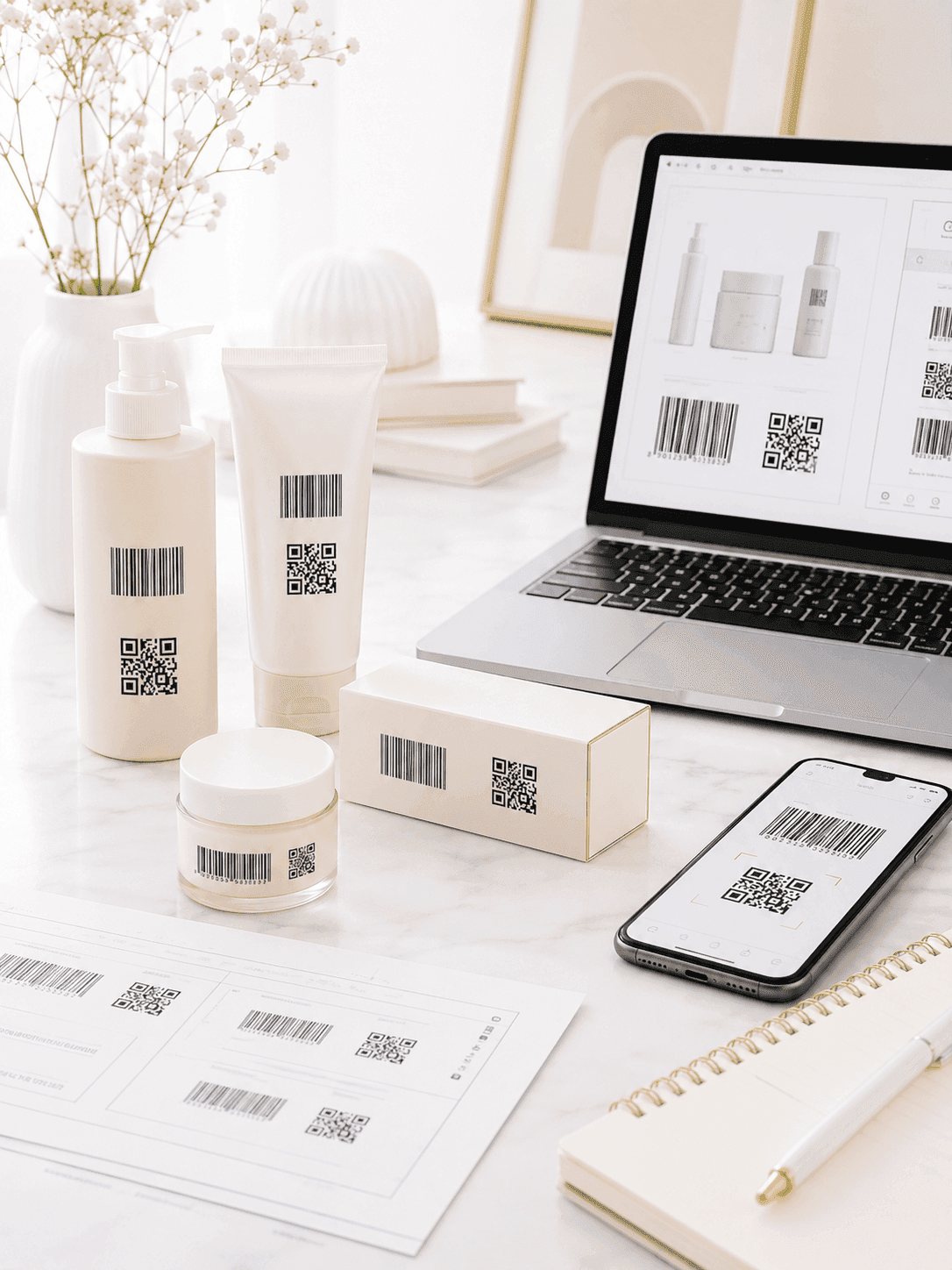
Here’s a practical path for sellers:
Step 1: Determine Your SKU List
Step 2: Apply Through the GS1 India Official Portal
Step 3: Choose a Suitable Plan
Step 4: Complete Verification & Payment
Step 5: Generate Barcode Images
Step 6: Assign to Packaging & Systems
Skipping these steps often leads to listing delays and rework later. By following this process, brands ensure that their cosmetic products are accepted by retailers, traceable in supply chains, and ready for compliance checks.
Yes, each variant (size, shade, packaging) needs its own barcode.
It’s best to obtain a barcode from an authorised body to ensure compliance and recognition.
Yes, if the barcode is a valid GS1-issued code, it will work across both retail and online platforms.
Yes, barcodes provide traceability, allowing you to isolate and remove affected products in case of a recall.
No, barcode images are only effective when linked to globally recognised identifiers. Ensure your barcode is valid before listing your product.
Your email address will not be published. Required fields are marked *