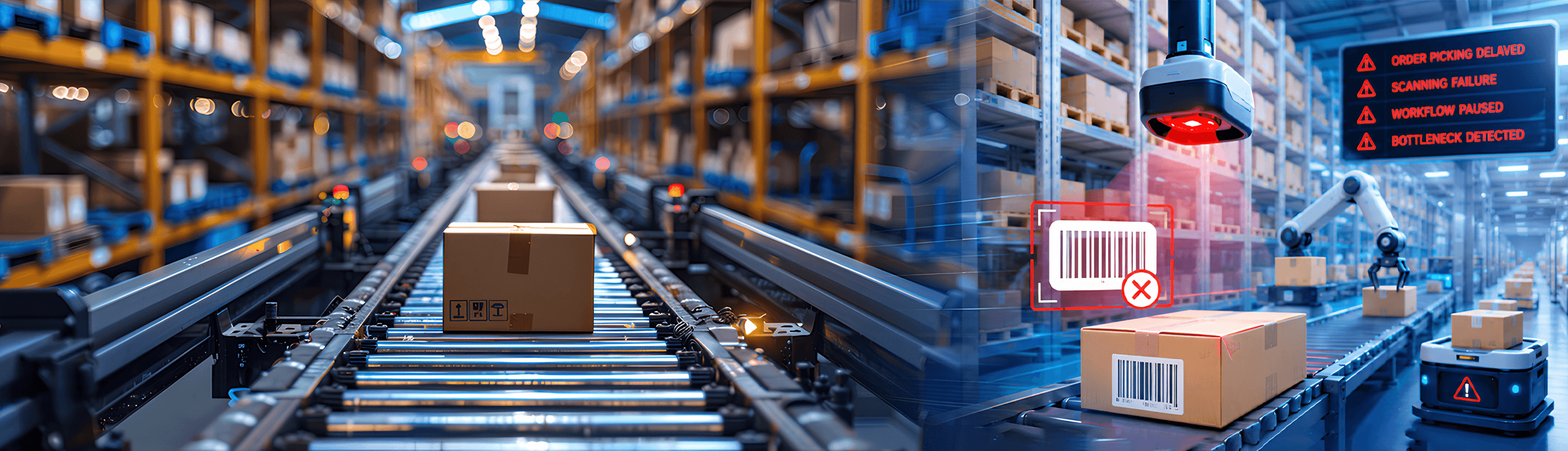

An automated warehouse can process thousands of shipments in a day, but one unreadable barcode is enough to slow an entire workflow. A package reaches the scanning point and fails validation. The conveyor stops and manual checking begins. Inventory updates pause until the product is verified correctly. In high-volume warehouses, these delays add up quickly. A lot of businesses invest heavily in warehouse automation but underestimate how dependent those systems are on barcode accuracy and readability. In automated environments, even small scanning failures create operational bottlenecks across movement, tracking, and inventory visibility. This is becoming a larger concern across modern logistics and supply chain management operations. Warehouses rely on continuous data flow to maintain speed and accuracy; this is because automation works only when systems can identify products instantly and consistently. As warehouse automation scales, businesses are also realising that warehouse efficiency directly influences broader supply chain and logistics performance, making barcode reliability more important than it appears.
Automated warehouses are designed around speed and minimal manual intervention. Products move through:
If a barcode cannot be scanned properly, the system cannot process the shipment automatically. That creates delays in routing, inventory updates, and order movement. This directly affects the overall logistic management system. It is because warehouse operations depend on real-time product visibility and uninterrupted scanning performance. In manual warehouses, staff may correct issues immediately. Automated systems are less flexible once product identification fails.
Most barcode failures are linked to packaging and label quality rather than warehouse technology itself. Common issues include:
These problems become more visible in automated environments. It is because scanners process products rapidly without manual adjustments. For businesses managing large-scale logistics and supply chain management operations, even a small percentage of unreadable barcodes can slow overall warehouse throughput significantly. That creates unnecessary operational friction across dispatch and inventory movement.
Warehouse bottlenecks rarely stay isolated. If products are delayed during warehouse processing, businesses often experience:
This is one reason companies involved in large-scale logistics and supply chain management are focusing more on barcode verification and packaging consistency before products even enter warehouse systems. The goal is to prevent operational slowdowns before they affect broader distribution networks. Many organisations now treat barcode performance as an operational priority. It is because warehouse visibility increasingly influences inventory planning and overall supply chain management outcomes.
Barcode performance should be treated as part of warehouse readiness, not just packaging design. Businesses should focus on:
A properly configured logistic management system performs much more efficiently when barcode quality remains consistent across inventory movement processes. More importantly, it reduces dependency on manual corrections later.
Automated warehouses rely on continuous scanning and have limited manual intervention, making barcode accuracy critical for uninterrupted operations.
Yes. Damaged labels, poor print quality, and incorrect barcode placement can slow automated scanning and reduce throughput.
Repeated failures can delay dispatch, interrupt inventory updates, and increase manual handling across warehouse operations.
Barcode testing should happen before product rollout and periodically across packaging batches to maintain scanning consistency.
Early validation helps prevent operational bottlenecks, improves inventory visibility, and supports smoother automated processing.
Your email address will not be published. Required fields are marked *