
In most industries, a delay is just another problem. In pharma, it can be a crisis. A single unidentified batch. A delayed recall. A product whose origin can’t be verified. That is all it takes to damage trust with regulators, partners, and patients. Pharma supply chains are not simple. They move across manufacturers, distributors, hospitals, pharmacies, and borders. And therefore, every unit is expected to be traceable. Today, assumptions don’t work; visibility does. Traceability is no longer a “good-to-have” system. It’s rather the backbone of compliance, patient safety, and global market access.

At its core, traceability means one thing: You can answer where a product came from, where it is, and where it went, at any point in time.
In pharma, this works in two directions:
This creates a complete product journey. But here is where most systems fail: they try to track without standardising.
Effective traceability depends on three building blocks:
If this data isn’t structured and consistent, the system breaks; not gradually, but completely.

a) Compliance is Non-Negotiable
Pharma operates under strict regulatory frameworks, both in India and globally.
Authorities expect:
Without this, products don’t just get delayed; they get blocked. Traceability systems help ensure compliance is built into operations, not handled as an afterthought.
b) Patient Safety Depends on It
Pharma products are not replaceable goods. They directly impact health outcomes.
You need to know:
Without traceability, you’re relying on assumptions. And in pharma, that’s not acceptable.
c) Counterfeit Drugs Are a Real Threat
Weak supply chains create entry points for falsified or sub-standard medicines.
If you cannot trace a product:
Traceability creates accountability. Every movement is recorded. Every product is verifiable. That alone makes it a critical defence layer.
d) Visibility Drives Operational Efficiency
Beyond compliance, traceability solves everyday operational issues.
It reduces:
And improves:
What changes is simple: you stop reacting to problems and start preventing them.
Recalls are not rare in pharma. They are expected. The difference lies in how you respond.
Without traceability:
With traceability:
The result? Lower financial impact. Faster response. Better control. Traceability doesn’t prevent recalls; it makes them manageable.
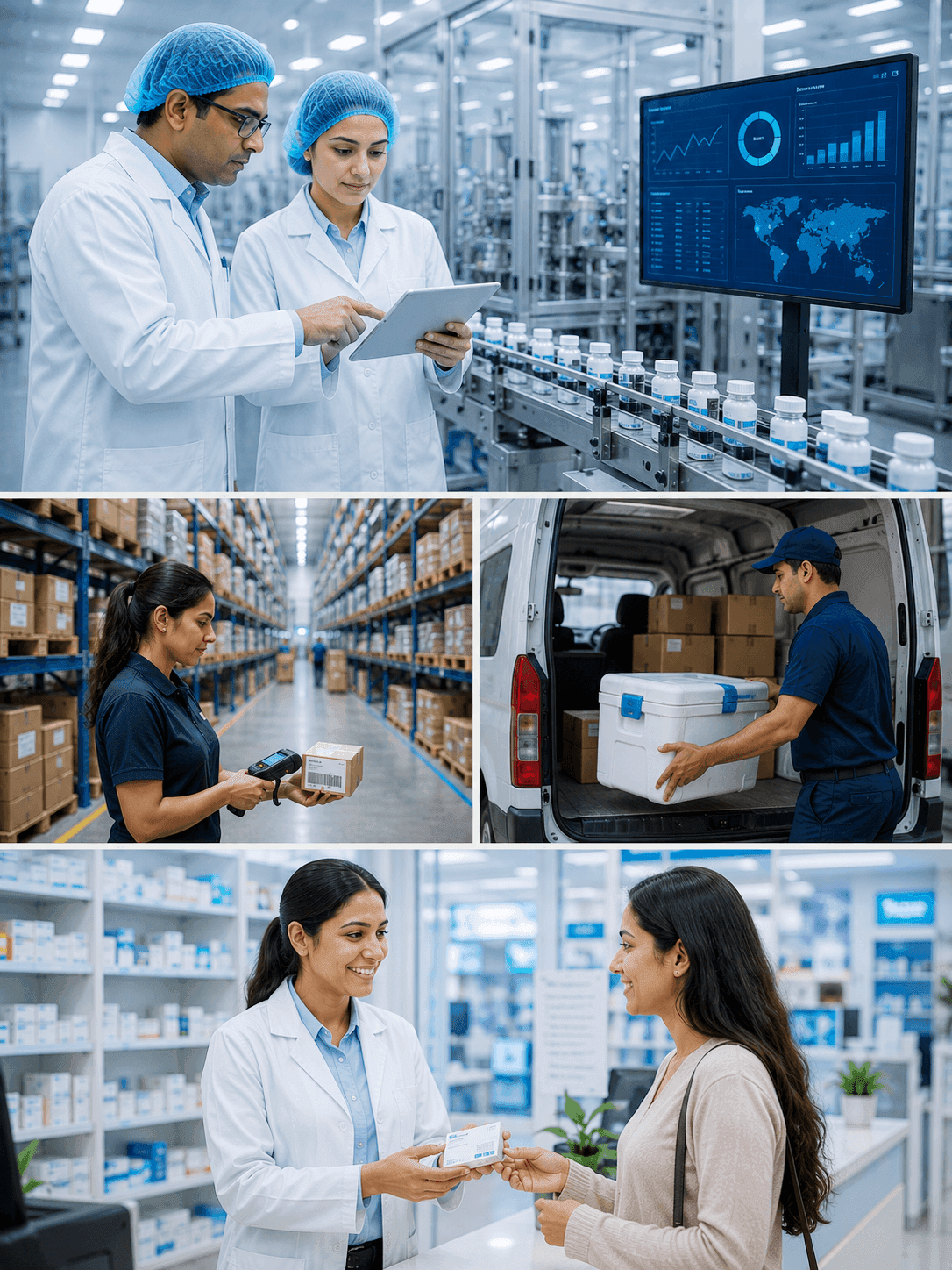
A strong traceability system works because it follows a standardised structure. It connects:
All through a shared data framework. This ensures:
In real-world execution, traceability platforms track products across every node and integrate with existing systems like ERP or SAP. What you get is not just tracking, but complete visibility across your supply chain.
Traceability is already evolving. We’re moving from:
Today, a simple scan can show:
And this isn’t just for internal use. Patients and regulators increasingly expect this level of transparency. Traceability is no longer hidden in backend systems. It is becoming visible at every level.
Early adopters of traceability don’t just stay compliant, but they also move faster.
They get:
Here is the blunt reality that if your pharma supply chain is not traceable, it won’t scale.
It ensures products meet serialisation, tracking, and reporting requirements across markets.
It tracks every product movement, giving real-time insights across all partners.
Falsified medicines risk patient safety and damage brand trust. Traceability helps detect and prevent them.
It enables batch-level identification, allowing faster and targeted recalls.
Shift toward QR-based systems and consumer-level transparency through product scans.
Your email address will not be published. Required fields are marked *